

Brand Strategy, Brand Architecture & Brand Management: The Complete Guide for Modern Businesses
Most businesses don’t actually have a branding problem.
They have a clarity problem.
They invest in a new logo, refresh their website, redesign their social media, and still struggle with inconsistent messaging, weak positioning, or attracting the wrong audience entirely.
The issue is rarely effort. It is usually structure.

Strong brands are not built through isolated creative decisions. They are built through a combination of brand strategy, brand architecture, communication, brand management, and long-term consistency. And increasingly, customers can tell the difference.
In a market saturated with polished visuals, AI-generated content, and endless marketing noise, the brands that stand out are usually the ones that feel the clearest, most cohesive, and most intentional.
This is where brand strategy, brand architecture, and brand management become critical.
Together, they form the system behind how a business is understood, trusted, remembered, and ultimately chosen.
This guide brings together the core principles behind modern branding — from positioning and messaging to identity systems and long-term brand management — to help businesses build brands that are not only visually strong, but strategically built for sustainable growth.
Why Branding Is More Than Just Visual Design
One of the biggest misconceptions in business is believing branding is primarily about visual design.
While design plays an important role, it is only one part of a much larger system.
Branding is fundamentally about perception
It influences how customers interpret your business, how they compare you to competitors, and how confidently they choose you. A logo or colour palette may help customers recognise your business, but recognition alone does not build trust or loyalty.
One of the most common patterns we see is businesses investing heavily in visual identity while struggling to explain what actually makes them different. The brand may look polished, but the positioning remains unclear.
This often leads to businesses:
competing on price rather than value
attracting the wrong audience
communicating inconsistently
struggling to differentiate in crowded markets
A stronger logo cannot solve confused positioning.
Two companies may offer nearly identical services, yet the business with clearer messaging and more consistent communication is usually perceived as more credible — even when the operational quality is similar.
Strong branding aligns three critical elements:
what your business does
how you communicate it
how customers perceive it
When these elements align, customers understand your value faster and trust builds more naturally. When they do not, even good marketing can feel fragmented or ineffective.
This is why branding should never be treated as decoration or an afterthought. It is a foundational business tool that shapes how every part of your organisation is experienced.

What Brand Strategy Actually Means
Brand strategy is the foundation behind every strong brand. It defines how a business should be positioned, communicated, and understood within the market.
At its core, brand strategy answers a set of fundamental questions:
Who are we trying to reach?
What problem do we solve?
Why should customers choose us?
What makes us different?
How should we communicate our value?
Without clear answers to these questions, branding becomes reactive. Messaging shifts constantly, marketing loses direction, and internal teams begin interpreting the brand differently.
A strong brand strategy typically includes:
Positioning
Positioning defines where your business fits in the market and why it is the right choice for a specific audience.
One of the clearest signs weak positioning is affecting a business is when customers understand what the company does, but not why it matters. The business becomes technically understandable, but strategically forgettable.
Strong positioning removes ambiguity and creates clarity.
For example, Nike rarely markets products through technical specifications alone. Instead, the brand consistently positions itself around ambition, performance, and identity — creating emotional association far beyond footwear itself.

Messaging
Messaging translates positioning into communication.
It ensures your website, marketing, social media, sales conversations, and campaigns consistently reinforce the same ideas rather than competing against each other.
One of the most common issues growing businesses face is what we often refer to as the Brand Clarity Gap — the space between what a business believes it communicates and what customers actually understand.
As businesses scale:
services expand
messaging fragments
teams communicate inconsistently
positioning weakens
Over time, the business becomes harder to understand despite becoming more operationally capable.
Audience Clarity
Understanding your audience goes beyond demographics.
Strong brands understand:
motivations
frustrations
decision-making behaviour
emotional drivers
This allows messaging to resonate more naturally and creates stronger alignment between customer expectations and brand experience.
Brand Direction
Strategy also helps businesses make consistent long-term decisions.
Without strategic direction, brands often react to trends, competitors, or short-term marketing pressures rather than building a clear and sustainable identity over time.
What Is Brand Architecture (And Why It Matters)
As businesses grow, complexity increases.
New services are introduced. Product lines expand. Different audiences emerge. Without structure, this growth often creates confusion both internally and externally.
Brand architecture is the system that organises how all these elements relate to each other.
It defines:
how your offerings are structured
how customers should understand them
how your business scales without becoming fragmented
There are several common approaches to brand architecture.
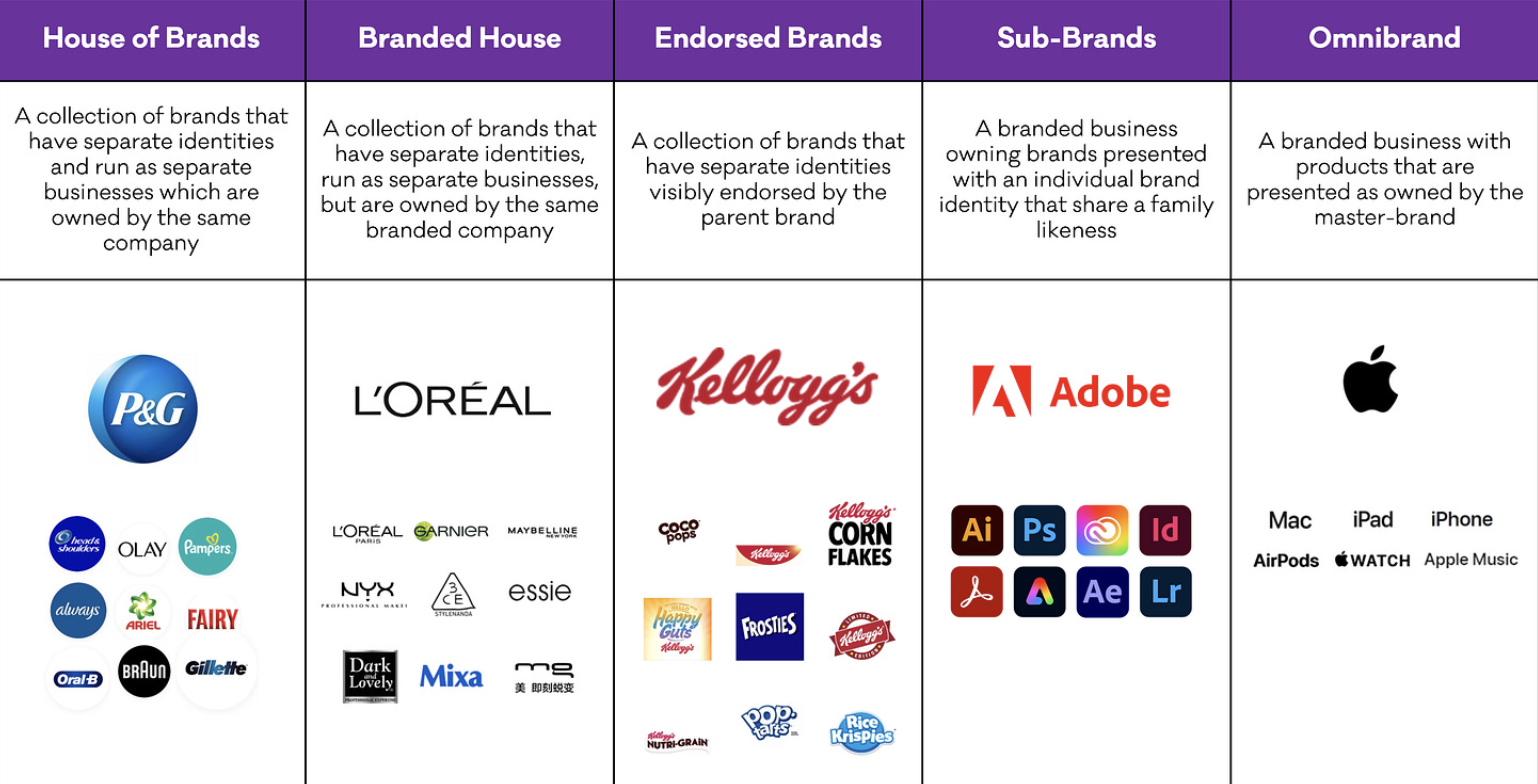
Branded House
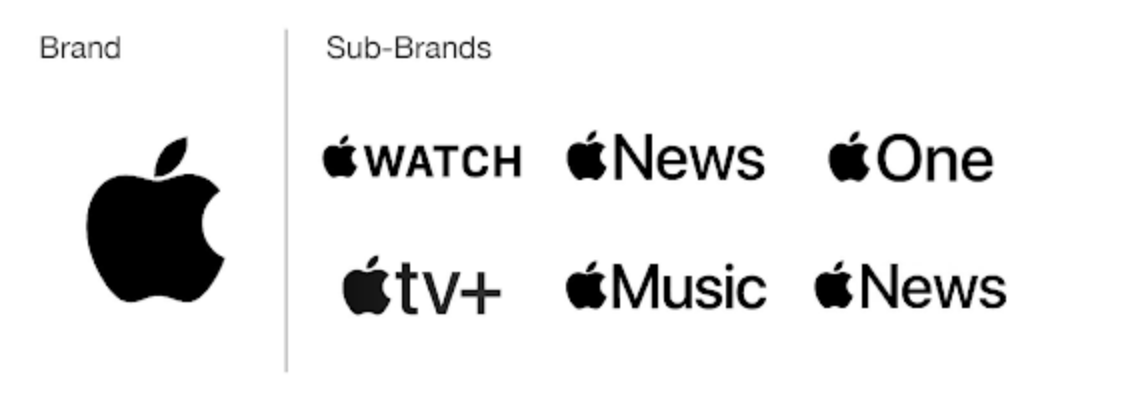
A branded-house model keeps all offerings under one core brand identity.
Apple is one of the clearest examples of this approach. Rather than fragmenting its ecosystem into disconnected brands, products operate under one unified identity — strengthening recognition and reinforcing consistency across the customer experience.
This approach creates:
stronger brand recognition
clearer communication
more efficient marketing systems
House of Brands
In this model, each product or service operates independently with its own identity.
This is more common among large corporations managing multiple audiences or industries.
Hybrid Models
Many modern businesses operate somewhere between the two.
Hybrid brand architecture allows businesses to maintain a strong parent identity while giving flexibility to certain products, services, or divisions.
One of the clearest signs a business has outgrown its architecture is when customers repeatedly misunderstand what the business actually offers.
Messaging begins overlapping. Services become difficult to distinguish. Marketing becomes repetitive. Internally, different teams describe the company differently depending on who is speaking.
Without structure, growth creates confusion.
With strong brand architecture:
communication becomes clearer
offerings become easier to understand
marketing becomes more focused
scaling becomes more sustainable
The Role of Brand Identity in Growth
Brand identity is where strategy becomes visible.
It includes the visual and verbal systems customers interact with across every touchpoint:
logo systems
colour palettes
typography
imagery
tone of voice
messaging frameworks
While these are often viewed as purely creative outputs, their real value lies in consistency.
A consistent brand identity reinforces:
recognition
familiarity
trust
When customers repeatedly encounter the same visual language and tone across your website, campaigns, social media, and presentations, the brand begins to feel reliable and cohesive.

Image from Lelive.
In contrast, inconsistency weakens credibility.
One of the biggest misconceptions in branding is believing visual identity is what makes a brand strong.
In reality, many visually impressive brands still struggle because their positioning is unclear. Design amplifies clarity — it does not replace it.
Strong brand identity is not about being visually impressive for the sake of it. It is about creating a system that consistently reinforces how the business should be understood.
Why Purpose-Driven Branding Matters
Purpose-driven branding focuses on defining why a business exists beyond profit.
This does not mean creating performative messaging or attaching social causes to marketing campaigns. Customers have become increasingly sensitive to brands communicating values externally without reflecting them operationally.
Purpose only becomes powerful when it is visible through action.
Purpose-driven brands often communicate:
what they stand for
what values guide decision-making
how they contribute beyond transactions
When applied authentically, purpose can:
strengthen emotional connection
build long-term loyalty
differentiate the business in saturated markets

Patagonia is one of the strongest examples of this in modern branding.
The company’s positioning around environmental responsibility extends beyond campaigns or slogans. It is reflected across operational decisions, repair initiatives, supply chain transparency, and leadership communication — which is why the brand feels credible rather than performative.
Purpose-driven branding is not about saying the right thing.
It is about building operational alignment between what a business communicates and how it behaves.
Why Businesses Work With Branding Agencies
Many businesses initially attempt to manage branding internally.
In early stages, this often works. But as businesses scale, complexity increases. Messaging expands across multiple channels, teams grow, offerings evolve, and maintaining consistency becomes significantly harder.
This is typically when businesses begin looking for external strategic support.
A strong branding agency helps businesses:
define positioning
clarify messaging
structure architecture
build identity systems
maintain long-term consistency
One of the biggest misconceptions around branding agencies is that their primary value lies in creative outputs.
In reality, the most valuable work often happens before design begins.
Many businesses approach agencies wanting:
a new logo
a visual refresh
a modern website
But the underlying issue is frequently strategic clarity rather than aesthetics.
Without strategic alignment:
marketing becomes fragmented
visual identity lacks direction
communication weakens over time
The role of branding is not simply to make a business look better.
It is to help a business become easier to understand, trust, and remember.
Common Branding Mistakes Businesses Make
Even strong businesses often weaken their brands through avoidable mistakes.
Treating Branding as a One-Time Project
Brands require ongoing brand management and refinement. Markets evolve, businesses grow, and communication systems need continuous alignment.
Prioritising Design Over Strategy
Without strategy, design lacks direction.
One of the most common branding mistakes is investing heavily in visuals while neglecting positioning and messaging clarity.
Trying To Appeal To Everyone
Generic messaging weakens differentiation.
The strongest brands are usually the clearest about who they are for — and who they are not for.
Inconsistent Communication
Different messaging across platforms creates confusion and weakens trust over time.
Ignoring Customer Perception
Branding is not shaped purely by intention. It is shaped by experience.
Businesses often communicate one thing internally while customers perceive something completely different externally.
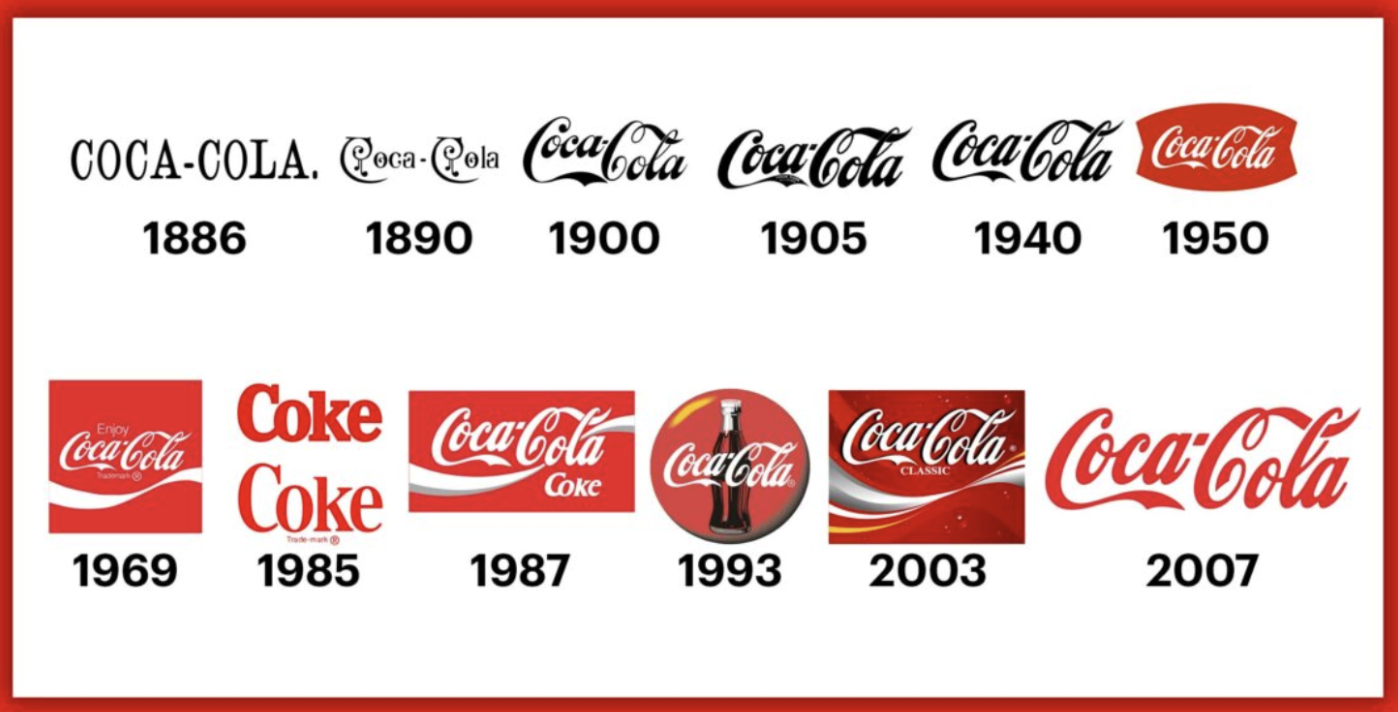
Failing To Evolve
Brands that never adapt eventually lose relevance.
This does not mean chasing every trend. It means refining positioning, communication, and systems as markets and audiences evolve.
How Brand Management Supports Long-Term Growth
Brand management is what transforms branding from a one-time project into a long-term business asset.
It ensures that the brand remains:
consistent
relevant
aligned
recognisable over time
This includes:
maintaining visual systems
aligning messaging
supporting campaigns
onboarding new team members into brand standards
managing consistency across platforms
adapting to changing markets without losing identity
One of the most common issues businesses face as they scale is gradual brand fragmentation.
Different departments begin communicating differently. Social media evolves separately from the website. Marketing campaigns shift tone depending on trends or platforms. Over time, the brand slowly loses cohesion.
Strong brand management prevents this.
It creates systems that allow businesses to grow while maintaining clarity and consistency.
This becomes increasingly important in modern digital ecosystems where customers interact with brands across dozens of touchpoints before making decisions.
Consistency is not about repetition.
It is about reinforcing recognition and trust over time.

A Practical Framework for Building a Strong Brand
Building a strong brand is rarely the result of isolated creative decisions. It is usually the result of structured alignment over time.
A simplified framework looks like this:
1. Define Your Strategy
Clarify positioning, audience, differentiation, and messaging.
2. Structure Your Brand
Use brand architecture to organise products, services, and communication systems clearly.
3. Build Your Identity
Develop visual and verbal systems aligned with strategy.
4. Align Touchpoints
Ensure consistency across:
website
social media
campaigns
presentations
customer interactions
5. Communicate Clearly
Reinforce positioning consistently rather than constantly changing direction.
6. Review and Refine
Strong brands evolve intentionally based on market feedback, customer behaviour, and business growth.
7. Manage Continuously
Branding is not static. Consistency requires active brand management over time.
Each step reinforces the next, creating a system rather than isolated outputs.
Why Strong Brands Win
Strong brands create measurable advantages across nearly every part of a business.
They:
build trust faster
improve recognition
support stronger conversion rates
attract more aligned customers
increase loyalty
create clearer differentiation
Because branding influences perception, it directly affects how customers make decisions.
Businesses with strong branding often find it easier to:
communicate value
maintain pricing confidence
scale marketing
attract the right audience
create long-term consistency
Increasingly, the brands that grow sustainably are not necessarily the loudest.
They are usually the clearest.

Founder, Evan Hamlyn
Final Takeaway
Branding is no longer a layer added on top of a business.
In increasingly saturated markets, it becomes the system that helps customers understand, trust, and remember a business in the first place.
Strong brands are built through:
strategy
structure
consistency
clarity
long-term management
Businesses that invest inbrand strategy,brand architecture, and ongoingbrand management create stronger foundations for sustainable growth.
Rather than relying on disconnected creative efforts, they build systems that scale with the business over time.
And increasingly, that difference matters.
Because customers can immediately feel the difference between a brand that looks good and a brand that is genuinely aligned.
If your business is looking to refine its positioning, strengthen consistency, or build a clearer long-term brand strategy, taking a more structured approach to branding can make a measurable difference.
