From Beginner to Growth: The Ultimate Digital Marketing Guide
Digital marketing can feel overwhelming when you’re starting out. With so many platforms, trends, tools, and opinions, it’s easy to waste time on tactics that don’t move your business forward. This ultimate digital marketing guide breaks down the fundamentals in a practical way for students, startups, and entrepreneurs—covering what digital marketing is, the key channels that matter, and how to build a strategy that actually drives growth.
Almost everyone lives online today—scrolling through feeds, watching videos, searching for answers, and shopping with a tap. Businesses that want to grow can’t afford to ignore digital channels. That’s why understanding what digital marketing is, is no longer optional; it’s the foundation of how brands connect with their audiences.
Whether you’re a student building skills for your future career, an entrepreneur launching a start-up, or a small business owner looking to scale, learning the essentials of digital marketing opens doors. It helps you reach the right people, engage them meaningfully, and guide them toward becoming loyal customers.
What Is Digital Marketing? (Simple Definition)
At its core, digital marketing refers to any marketing activity that uses the internet or digital technology to promote products, services, or brands. Unlike traditional methods such as billboards, radio, or print ads, digital strategies use platforms like Google, Instagram, YouTube, and email to deliver measurable, targeted results.
Think of it as a toolbox filled with channels: Google Ads, social media posts, email newsletters, blogs, influencer campaigns, and more. All of these work together to increase visibility, build trust, and generate growth.
How Digital Marketing Works
Understanding how digital marketing works starts with recognizing the customer journey. A successful digital campaign takes someone from discovering your brand (awareness), to interacting with your content (engagement), to making a purchase or inquiry (conversion).
For example, a small clothing brand might post TikTok videos to build awareness, run Instagram ads to reach new customers, use email campaigns for promotions, and optimize their website with SEO to capture search traffic. Each channel plays a role in moving people through the funnel.
The 9 Core Types of Digital Marketing
To get the most out of your strategy, it helps to know the main categories. These types of digital marketing form the backbone of modern brand growth:
Search Engine Optimization (SEO) – Optimizing your website and content to rank higher in search engine results.
Content Marketing – Creating valuable blogs, videos, guides, and other content that educates and engages your audience.
Social Media Marketing – Building community and awareness on platforms like Instagram, LinkedIn, Facebook, and TikTok.
Paid Advertising (PPC/Google Ads/Meta Ads) – Running ads to target specific audiences and drive quick results.
Email Marketing – Sending tailored updates, offers, and content directly to your subscribers.
Influencer Marketing – Partnering with trusted voices who share your product with their audiences.
Affiliate Marketing – Rewarding third parties for bringing in leads or sales through tracked links.
Mobile Marketing – Engaging users through SMS campaigns, mobile apps, or push notifications.
Marketing Automation & CRM – Using tools to manage customer relationships, segment audiences, and run automated campaigns.
Each of these types of digital marketing can be used independently, but they work best when combined strategically.
Digital vs Traditional Marketing
One of the biggest advantages of digital over traditional marketing is measurability. With TV, radio, or print ads, it’s hard to track how many people took action. Digital marketing, on the other hand, provides instant feedback through clicks, impressions, conversions, and analytics.
Here’s a quick comparison:
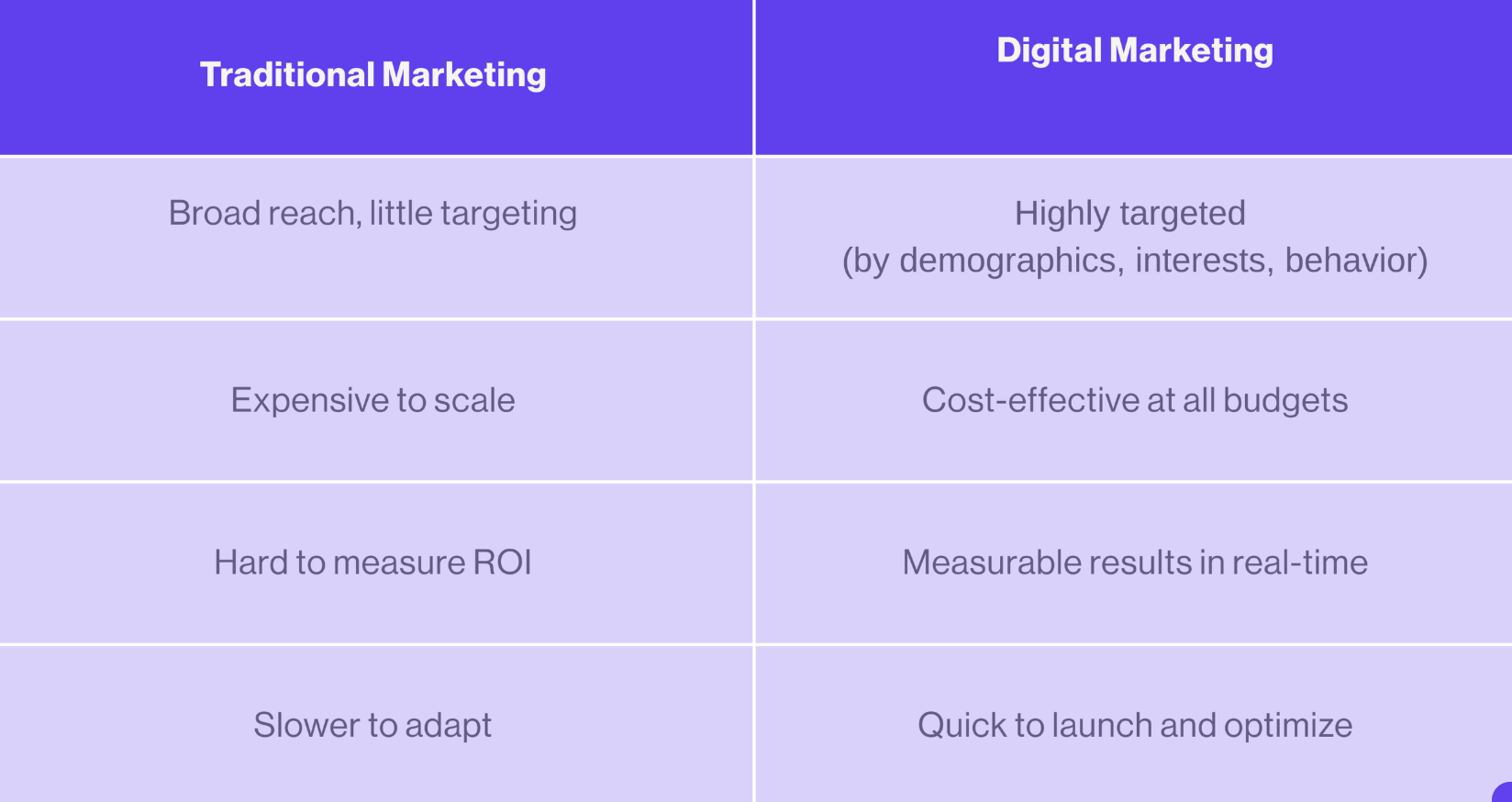
For businesses, this means more control over spend, better audience alignment, and the ability to pivot quickly.
Real-World Examples: Digital Marketing in Action
At Legs Brands, we’ve seen first-hand how digital strategies create impact:
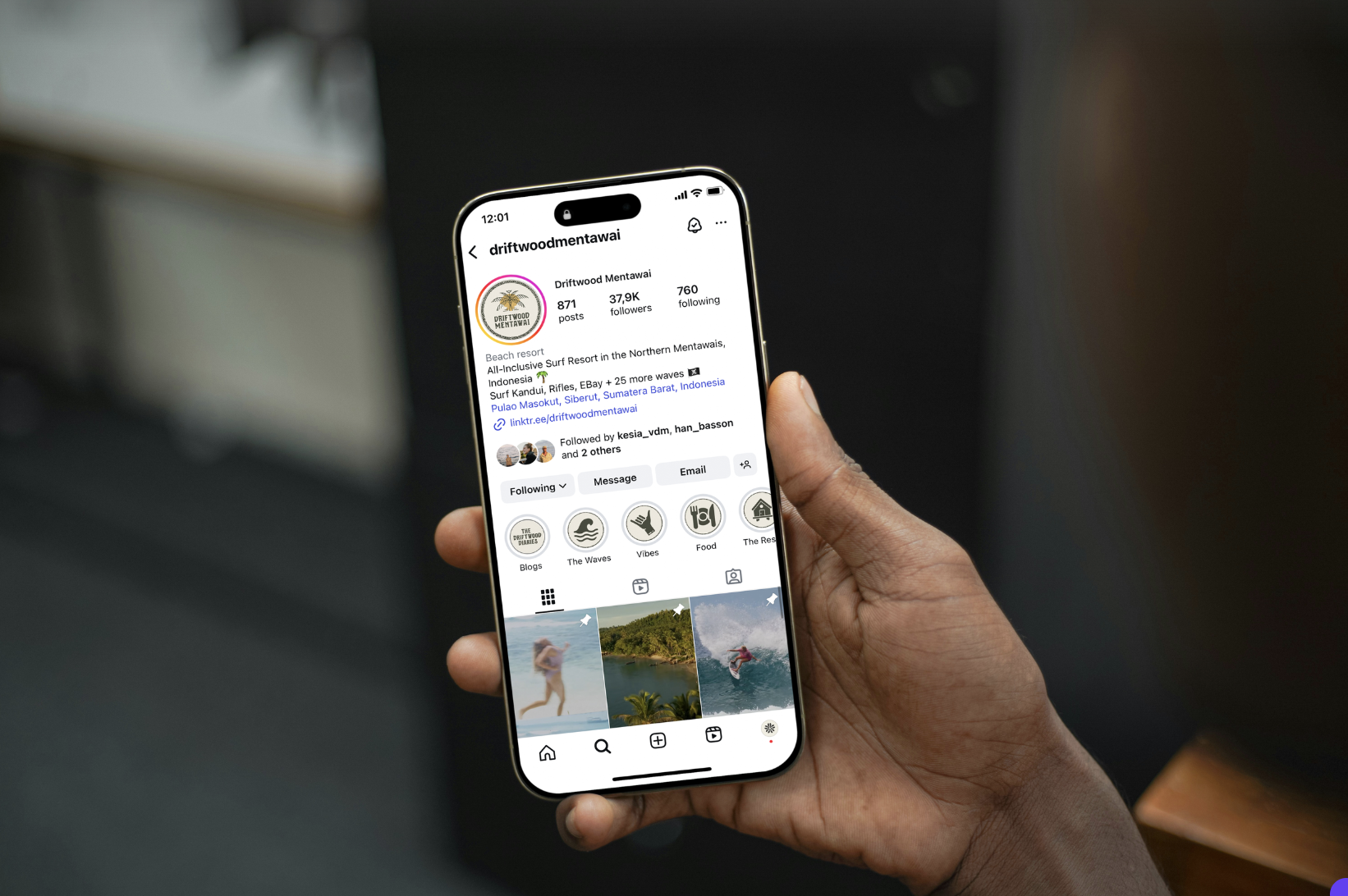
Driftwood Mentawai grew its organic reach with carefully managed social media campaigns that showcased authentic storytelling and high-quality visuals.
Big Bore Safari’s leveraged funnel strategies, using social ads and landing pages to attract high-intent travelers and convert them into bookings.
The Icon Group expanded its talent pool by using digital platforms to target specific industries, building both awareness and applications.
Bona Life tapped into Google Ads to generate leads for financial products, optimizing campaigns for conversions.
These campaigns prove that digital marketing isn’t just theory—it works across industries, from surf retreats to safari tourism to insurance.
Digital Marketing Basics: Key Benefits
If you’re still wondering why to invest, here are the biggest advantages of understanding digital marketing basics:
Measurable Results – Every campaign can be tracked, letting you see what’s working and what isn’t.
Audience Targeting – You can reach people by their age, location, interests, or even buying behavior.
Cost-Effectiveness – Even small budgets can achieve results with the right targeting.
Flexibility – Campaigns can be launched, paused, or tweaked in minutes.
Long-Term ROI – Content like blogs and videos continue to drive results long after they’re published.
These digital marketing basics help businesses understand that growth doesn’t happen overnight but builds with consistent, well-structured strategies.

Beginner Mistakes to Avoid
When diving into digital marketing, beginners often make the same missteps:
Chasing Trends Without Strategy – Don’t jump on every viral idea without knowing how it supports your brand.
Being on Every Channel – Focus on the platforms where your audience actually spends time.
Not Tracking Performance – Without analytics, you’re marketing blind.
Ignoring Brand Voice – Consistency matters—your tone should reflect who you are.
Avoiding these mistakes will save time, money, and effort.
How to Get Started with Digital Marketing
The best way to start is by keeping things simple:
Define Your Goals – Are you looking for awareness, leads, or direct sales?
Choose Your Channels – Select one or two platforms that best fit your audience.
Start Small – Create blogs, run a few ads, or launch a basic email campaign.
Learn the Tools – Familiarize yourself with SEO, Google Analytics, or social ad dashboards.
Track Everything – Use data to guide your next moves.
Once you understand how digital marketing works, you’ll be able to scale confidently and strategically.
Explore More: Related Guides
Looking to deepen your knowledge? Check out these resources of ours:
These guides build on the foundation you’ve learned here, giving you practical steps to keep growing.
Why Every Business Needs a Digital Marketing Blueprint
Random posts and scattered ads burn budget. A clear digital marketing blueprint aligns your goals, channels, and content so every activity has a job to do. This guide is not theory—it’s a practical framework you can copy, customize, and put to work this week.
What Is a Digital Marketing Blueprint?
It’s a living document that maps your objectives, audience, channels, messaging, budgets, and metrics. Think of it as the bridge between your business ambitions and day-to-day execution. Use it to inform your digital marketing plan and keep teams and partners accountable.
Step 1: Define Your Business Objectives
What must marketing achieve in the next 3–6 months? Pick 1–2 primary goals: awareness, leads, sales, retention, or average order value. Attach numbers and dates (e.g., “200 qualified leads by 30 Nov”). Clear objectives anchor your digital marketing blueprintand your reporting cadence.
Step 2: Know Your Audience
Document 2–3 personas with pains, desired outcomes, buying triggers, and barriers. Answer: What problem do they want solved? Where do they already spend time online? What proof do they need to act? This shapes your offers and helps you build a marketing strategy that speaks to real needs (not assumptions).
Step 3: Audit Your Current Digital Presence
Review website UX, site speed, SEO health, content library, socials, email list, and paid media. Identify quick wins (fix broken CTAs, update high-traffic pages, add lead magnets) and strategic gaps (no lifecycle email, weak landing pages). An honest audit tells you how to market your business online with focus.
Step 4: Choose Your Channels
Balance organic vs paid and short-form vs long-form based on where your audience consumes and how quickly you need results. Common mixes:
SEO + long-form content for compounding traffic.
Social + short video for discovery and proof.
Paid search/social for predictable acquisition.
Email + CRM for retention and LTV.
Your digital marketing plan should list each channel, its role in the funnel, cadence, and success metric.
Step 5: Set Your Core Messaging & Content Pillars
Define the story you’ll tell repeatedly: value prop, differentiators, offers, and proof (testimonials, case studies, UGC). Create 3–5 content pillars (e.g., Education, Product Proof, Community, Offers, Behind-the-Scenes). This is where youbuild a marketing strategy that’s consistent across every touchpoint.
Step 6: Assign Budgets & Responsibilities
Specify monthly budgets by channel, tools required (ads manager, email, analytics, design), and who’s accountable (internal lead, agency, freelancer). Clarity prevents bottlenecks and makes forecasting real.
Step 7: Set KPIs & Track Performance
Tie metrics to goals per channel: CTR, CPC, CPA, ROAS, conversion rate, lead quality, list growth, retention, LTV. Set a weekly dashboard and a monthly review: what moved, what stalled, what we’ll test next. This keeps your digital marketing blueprint measurable, not theoretical.
Step 8: Optimize & Iterate Monthly
Run small tests (creative, audiences, landing pages, email subject lines) and log learnings. Kill what underperforms, scale what works. Momentum comes from disciplined cycles, not one-off bursts. That’s how to market your business online sustainably.
Case Study Snapshot (Strategy ➝ Channels ➝ Results)
Bona Life— We structured campaigns around audience segments (young professionals, families), aligned messaging with product benefits, and used Google Search + landing pages + email follow-ups to improve lead quality and response speed.
Big Bore Safaris — A funnel built on discovery content, paid traffic to targeted landing pages, and enquiry workflows helped qualify leads and streamline bookings.
The Icon Group — Targeted campaigns expanded reach into specific talent pools while reinforcing the brand.
Each win traced back to the same engine: a clear plan, tight creative, and fast iteration.
Driftwood Mentawai — Consistent storytelling and community-led social content supported season demand and showcased authentic guest experiences.
Are Digital Marketing Courses Worth The Investment?
Demand for digital skills keeps rising. Remote work, creator tools, and performance media mean people switch careers faster—and well-structured learning can help you catch up. So, is a digital marketing course actually worth it? Short answer: yes—if you choose wisely and pair it with practice.

What You Actually Learn in a Digital Marketing Course
Most programs cover the full stack: SEO, content, social media, paid ads, email, analytics, and CRM/automation. A digital marketing course typically blends strategy (audience, positioning, funnels) with execution (campaigns, landing pages, reporting). You’ll also learn tool fluency (ad platforms, email suites, dashboards) and the soft skills teams value—clear writing, creative problem-solving, and data-driven thinking. Some tracks stay foundational; others specialize (e.g., performance marketing, growth strategy, lifecycle). The best programs make you ship work you can show in a portfolio.
Foundational vs specialization: Foundations give you breadth; specialization deepens one area (SEO, paid media, email/CRM).
Hard vs soft skills: Keyword research, media buying, GA4 reporting—plus clarity, collaboration, and presenting insights.
When a Digital Marketing Course Is Worth It
You’re starting from zero and want a structured path.
You need accountability, deadlines, and feedback.
You’re pivoting careers and want a credible certificate plus portfolio projects.
You’re aiming for agency work, freelancing, or launching your own brand.
In these cases, a digital marketing course saves time by curating what to learn and in what order.

When a Course Might Not Be the Right Fit
You’re only there for the certificate and won’t build anything.
You already have strong real-world results (ship more; study less).
You expect instant high-paying roles—learning helps, but outcomes require doing.
If that’s you, focus on project work and targeted digital marketing training instead of a full curriculum.
Top Digital Marketing Courses to Consider in 2025
Here’s a practical shortlist of the best digital marketing courses 2025 to evaluate (generalist + specialist options):
Google Digital Garage — Fundamentals of Digital Marketing (free) — official certificate; broad foundations via Skillshop.
HubSpot Academy — Inbound Marketing (free) — content, email, automation, and CRM thinking.
Meta Blueprint — Paid Media Training (free) — Meta ads education and live workshops.
Coursera x University of Illinois — Digital Marketing Specialization — university-backed, multi-course path.
LinkedIn Learning — Master Digital Marketing (learning path) — curated pathway across channels.
Udemy — The Complete Digital Marketing Course (12-in-1) — broad, affordable generalist curriculum.
Red & Yellow (SA) — Digital Marketing Online Course / Diploma — accredited local options.
Vega School (SA) — BA in Strategic Brand Communication — degree pathway with brand strategy depth.
This isn’t an exhaustive list, but it’s a reliable starting point when you search for the best digital marketing courses 2025 for your goals.
What to Look For in a Good Course
Hands-on projects & case studies you can publish in a portfolio.
Updated curriculum (AI tools, GA4, short-form video, privacy changes).
Credible instructors/partners and clear outcomes.
Community or mentorship for feedback and momentum.
Career support or freelance guidance (templates, interview practice, client playbooks).
If you prefer a lighter lift, targeted digital marketing training—like a one-month sprint on SEO or paid social—can be smarter than a long generalist program.

Legs Brands POV: Courses vs. Real-World Output
Courses matter—but output matters more. When we review applicants, we look for:
Accountability: you shipped campaigns, not just watched videos.
Strategic clarity: you can explain the “why” behind channel choices.
Experimentation: you tested, measured, iterated.
A common standout: someone who created a small brand, ran a two-week paid test, wrote a short post-mortem, and improved the funnel. That story beats a certificate every time.
4 Beginner Tips For Carefully Crafting Your Digital Marketing Strategy
Digital marketing is the process of promoting your brand and products/services online. It’s a broad term that covers a variety of marketing activities, including SEO, social media, email marketing, and more.
Not sure where to start? Don’t worry, we’re here to help. In this blog post, we’ll give you some tips on how to create a successful digital marketing strategy for your business.
*These are the basics and should be used to help guide you to further deepen your knowledge. Use this as a simple guide, and then get searching over the internet for more tips. There is an abundance of free knowledge regarding digital marketing.
1. Define Your Goals
Before you can start developing your digital marketing strategy, you need to know what you want to achieve. Are you looking to increase brand awareness? Drive more traffic to your website? Generate more leads? Once you’ve identified your goals, you can start putting together a plan to achieve them.
We take on a broader set of goals, and then with a granular approach map out our goals into segments. For example, today we wrote out our 2023 goals for our agency (yes, w know, it’s already the 18th of Jan, and only getting around to this now). We started with our overall goals for our creative branding agency and then moved into splitting these goals for each quarter so that we have a map to follow and to accomplish.
With branding or marketing goals, you can take on the same approach — always start with the end goal in mind and work backward. Also, goals should have a time limit and a value to them. For example, if I was a DTC wine library selling wine online, I would start with my overall goal — to grow sales by 200% in 2023. Next, I would break that up into each quarter — Q1, and grow by 50% by the end of March ‘23. Easy right?
2. Identify Your Target Audience
Who are you trying to reach with your digital marketing efforts? Knowing who your target audience is will help you determine which channels to focus on and what type of content to produce. For example, if you’re trying to reach middle-aged women, Facebook would be a good place to start. However, if you’re targeting young adults, TikTok or Instagram might be better suited for your needs.
When we help my clients with this task we always start off with a casual brainstorming session. We like to make our clients feel at ease, as we believe that is when the best ideas come to mind. We start wide, naming all the various types of customers that they get. We then narrow this down to a handful of groups. Usually, the rule of thumb is that most businesses have 3–5 types of customers that they target.
Once we have narrowed these segmented customers, we then give them a name — for example, one client of the online wine library store could be a wine enthusiast who collects vintage wines; another could be someone buying wine for a once-off special occasion. Let’s name these customer types ‘Wine Enthusiast Wendy’ & ‘Once-off Ollie’. The above-mentioned can be summarized into a process of marketing that the industry calls ‘persona mapping’.
A persona map allows you, the strategist, to get into the mind of that said customer profile/persona.
You begin wide (again) with their demographics then move into psychographics and then the real fun starts — you plot out how they make decisions, what are their frustrations regarding the category that your business is in, how they gain information or knowledge — is their role of search via wine magazines and online publications or do they attend a private wine club. All of these questions that you ask yourself help you paint a pretty picture of ol’ Wendy.
Persona mapping is a ball game in itself and requires another article to be written in due course.
3. Create Compelling Content
Once you know who your target audience is and what channels they’re using, it’s time to start creating content. Your content should be compelling and relevant to your audience. It should also be optimized for search engines so that people can easily find it when they’re looking for information related to your products or services. Not all about selling! Sure, you want people to buy your products or use your services, but that shouldn’t be the only focus of your content. You should also aim to educate and entertain your audience so that they keep coming back for more.
Creating great content is essential if you want people to actually read (and share) what you’ve published. But it’s not always easy coming up with fresh ideas that will resonate with your audience. That’s why it’s important to have a solid content marketing strategy in place before you start publishing anything. Once you have a plan in place, stick to it!
Consistency is key when it comes to driving results with digital marketing.
For example, you could publish a short article on ‘best wines in the Cape Winelands 2022’ from which ‘Once-off Ollie’ who is not so clued up on wines will benefit from. However, ‘Wine Enthusiast Wendy’ will most likely have formed her own opinions of which wines were the best as she could feel that her knowledge is greater, and at the end of the day, a product like wine is subjective to the palate of the drinker. Wendy would most likely like to read an in-depth white paper on the effects of sulfur on long-term wine drinkers by a reputable guest writer. So make sure that you have a solid and diverse content strategy.
4. Analyze Your Results Regularly
Last but not least, don’t forget to analyze the results of your digital marketing efforts on a regular basis so that you can fine-tune your strategy as needed. Which posts are getting the most engagement? What type of content is driving the most conversions? Use data from analytics tools like Google Analytics and Social Insights to inform your decisions going forward and make sure that each penny you’re spending on digital marketing is working hard for your business. By regularly analyzing the performance of your campaigns and making adjustments accordingly, you can ensure that your digital marketing budget is well-spent and that you’re getting the best possible return on investment (ROI).
For example, we use 3 platforms to measure the success of our client's websites for SEO purposes — Google Analytics is the stock standard platform which we visit about once a week. We then use SEMrush on the daily basis to measure the growth of my client's keyword positioning & also not to mention SEMrush provides me with great tips to grow my SEO overall score. Lastly, we use Ubersuggest by Neil Patel just like we use SEMrush as a second analysis of my SEO score, just to make sure that our results are correct.
Disclaimer: we are not affiliated with either of these platforms.
***
So to summarize, there’s no denying that digital marketing is essential for businesses today. If you want to stay competitive, you need to have a strong online presence. Luckily, there are plenty of resources out there that can help. By following the tips outlined in this blog post, you’ll be well on your way toward developing a successful digital marketing strategy for your business. It is an ever-changing landscape, and an interesting one at that, so enjoy the ride.
We have written a white paper on the importance of a purpose-driven marketing strategy. Purpose-driven marketing is becoming more prominent in brands today from startups to Fortune 500 enterprises. Access the paper below, we’d highly recommend it.
FAQs Answered for 2025
1. What is a digital marketing strategy and why is it essential in 2025?
A digital marketing strategy is a structured plan that outlines how a business will use online channels—like social media, SEO, email marketing, and content—to achieve specific goals. In 2025, having a strong digital marketing strategy is essential for businesses to remain competitive, connect with modern audiences, and track measurable results across platforms.
2. How does a purpose-driven marketing strategy fit into digital planning?
A purpose-driven marketing strategy integrates your brand’s core values into every digital effort—from content to campaigns. It ensures your messaging is authentic, emotionally engaging, and aligned with what your audience cares about. Brands that connect purpose with performance tend to earn higher loyalty and long-term engagement in today’s values-driven marketplace.
3. How do I define clear goals for my digital marketing strategy?
Start with business outcomes like lead generation, sales growth, or brand awareness. Then apply the SMART goal method: make your objectives Specific, Measurable, Achievable, Relevant, and Time-bound. For example, instead of saying “get more traffic,” your goal might be “increase website visits by 30% within 3 months through SEO and content marketing.”
4. What are the best tools to track my digital marketing performance?
Some of the most popular and effective tools for tracking your digital marketing strategy include:
Google Analytics (for traffic and conversion data)
SEMrush or Ubersuggest (for keyword and SEO insights)
Meta Business Suite (for social media engagement metrics)
HubSpot (for lead tracking and CRM integration)
These platforms help you understand what’s working, where to optimize, and how to allocate your budget effectively.
5. How often should I update or review my digital marketing strategy?
You should analyze your digital marketing performance monthly and make strategic updates quarterly. Given how fast platforms, trends, and algorithms change, regular reviews ensure your strategy stays relevant, competitive, and aligned with evolving consumer behavior. This is especially important if you’re implementing a purpose-driven marketing strategy, which relies on consistency and authenticity over time.