How We Took the Legs Brands Website From 75% to 90% Site Health: A Real SEO Cleanup Case Study
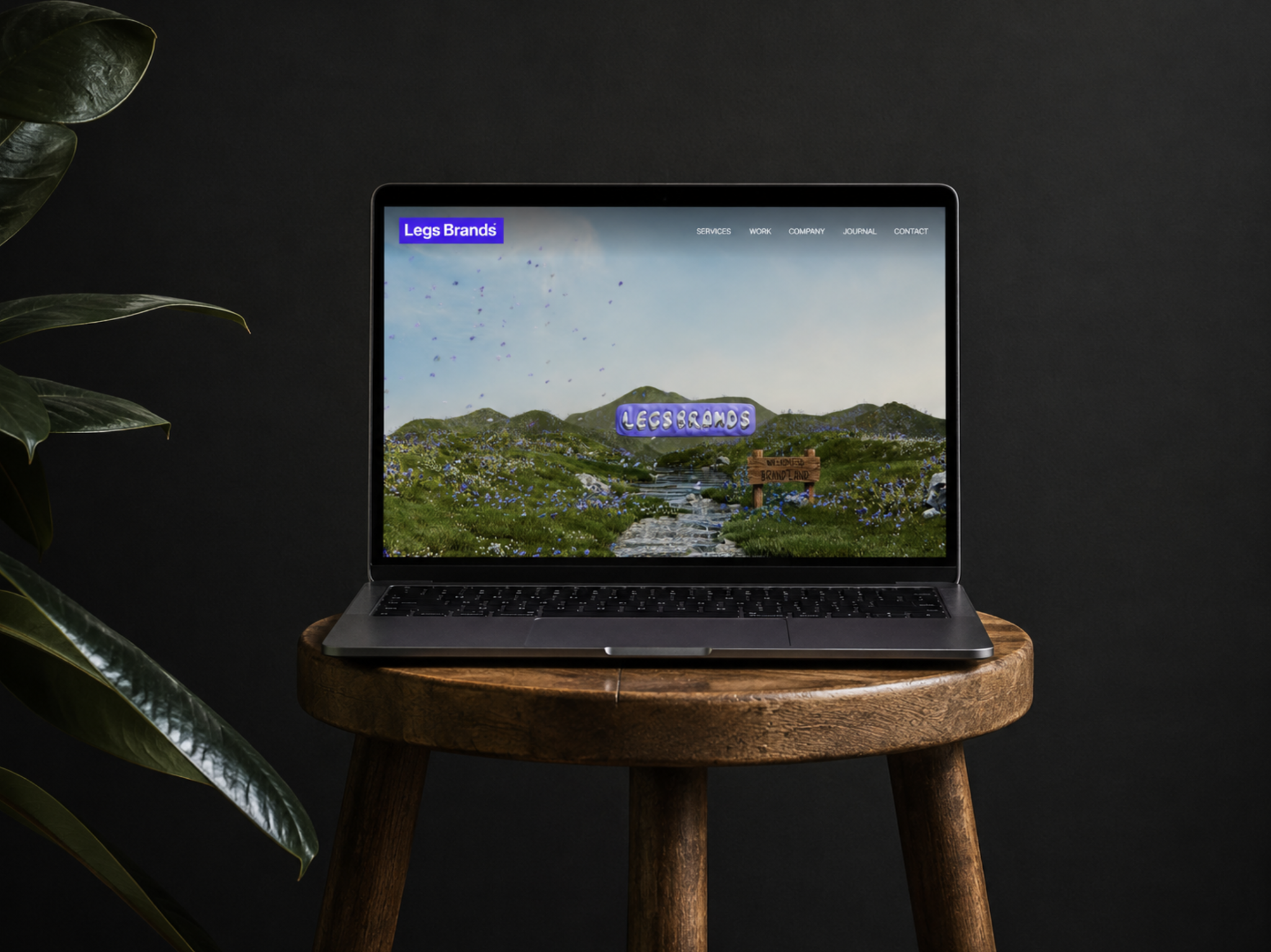
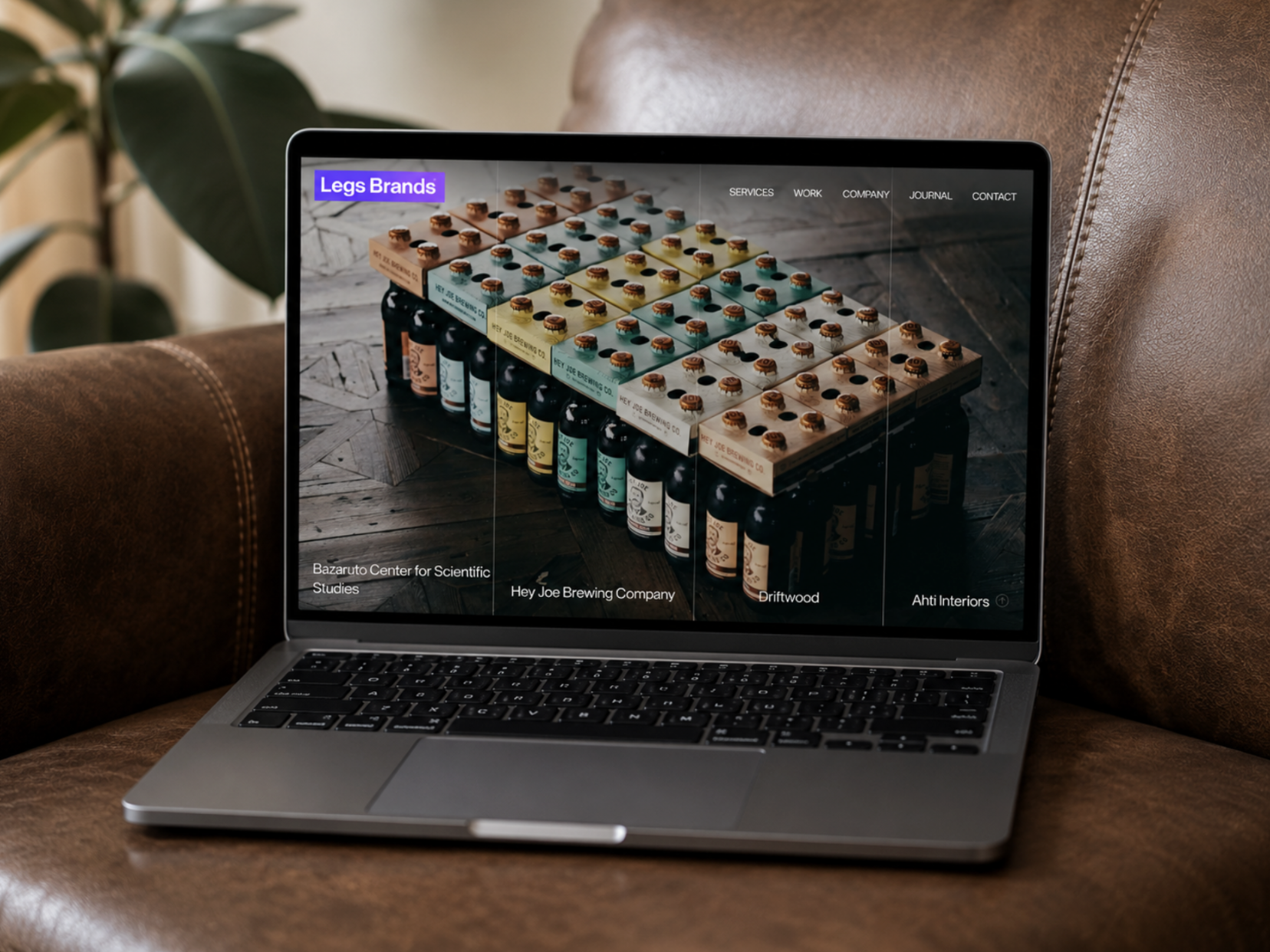
Legs Brands website homepage
SEO success stories often focus on dramatic ranking increases, massive traffic gains, or overnight growth. What is rarely discussed is the work that happens before any of those results become possible.
This case study documents the complete SEO cleanup and optimisation journey of the Legs Brands website. Rather than starting from scratch, we began with an established website that was visually strong, professionally designed, and already contained a substantial amount of content. However, beneath the surface, there were structural issues, technical SEO challenges, outdated content, and inconsistencies that were preventing the website from reaching its full potential.
Over several weeks, we undertook a comprehensive SEO review using Google Search Console and SEMrush. The process involved auditing hundreds of pages, consolidating blog content, fixing technical errors, improving metadata, restructuring service pages, and carefully monitoring how Google responded to the changes.
The goal was not simply to improve a score inside an SEO tool. The goal was to create a cleaner, more authoritative website that Google could understand, crawl, and rank more effectively.
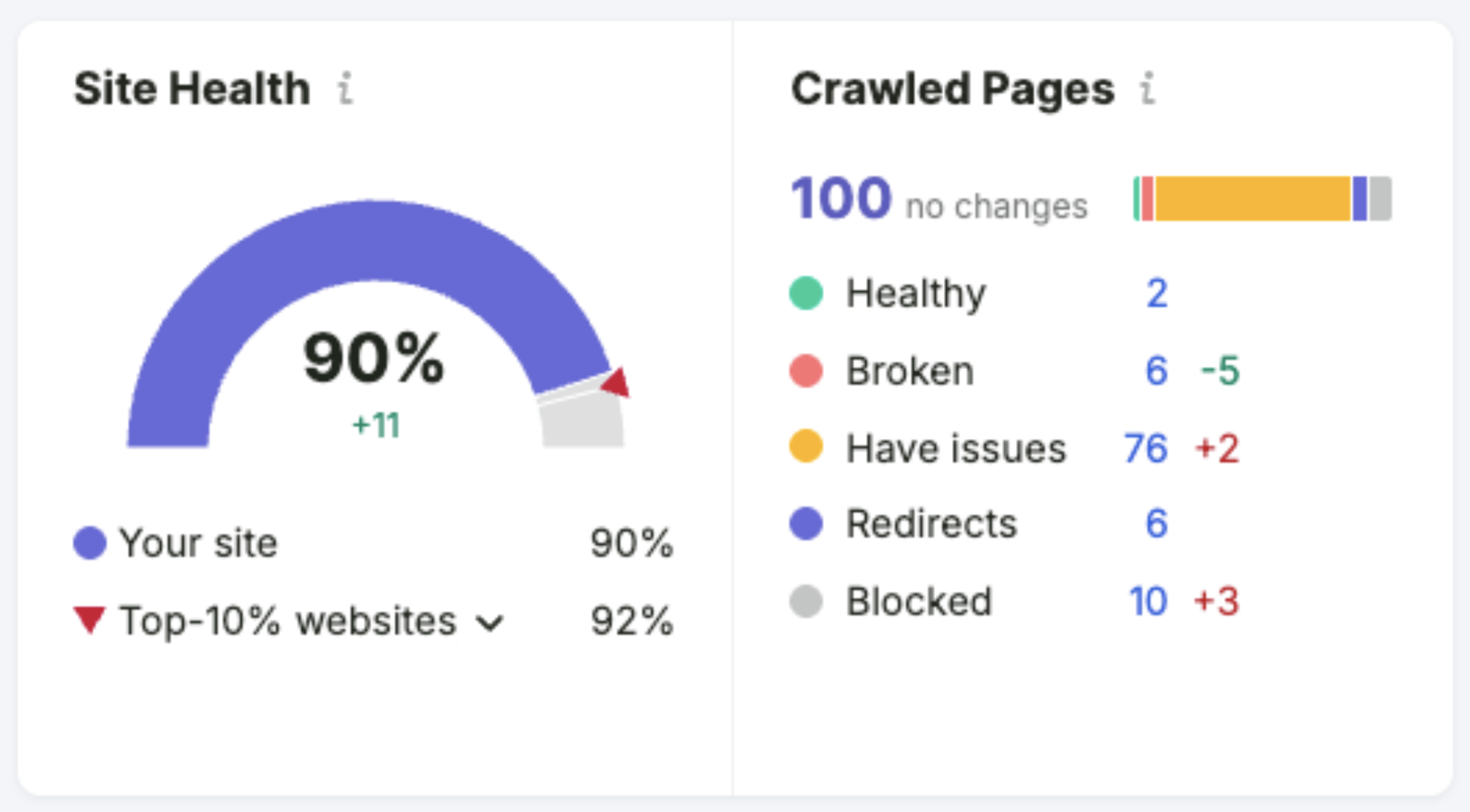
The result was an improvement in SEMrush Site Health from approximately 75% to 90%, a stronger content strategy, improved crawlability, and a website positioned for long-term organic growth.
The Starting Point
Like many agency websites, Legs Brands had evolved over time.
New pages had been added. Services had changed. Blog content had accumulated. Client projects had been published. Design improvements had been implemented. While each individual update served a purpose, the cumulative effect created a website that had become increasingly difficult to manage from an SEO perspective.
The first major insight was that visual quality does not automatically translate into SEO performance.
The website looked professional and communicated the Legs Brands brand effectively. However, search engines evaluate websites differently than people do. Google cares about site structure, crawlability, internal linking, content relevance, page hierarchy, and technical health.
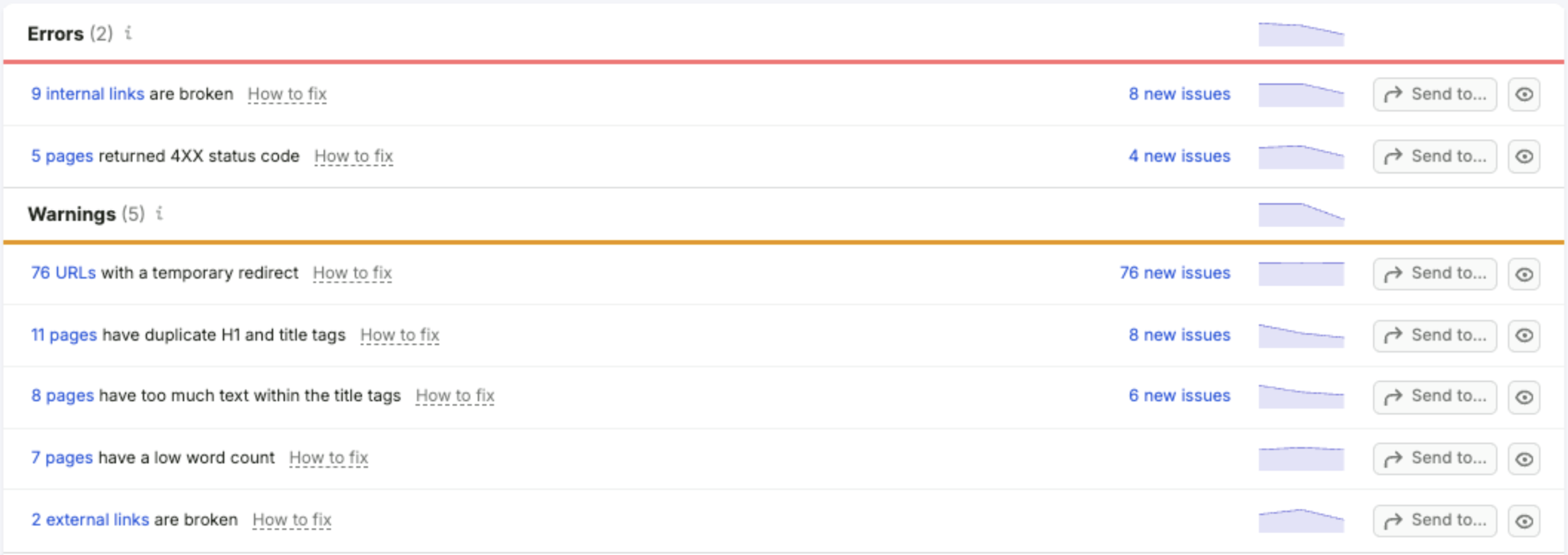
Initial audits revealed a number of issues:
Duplicate and outdated pages
Thin content pages
Legacy URLs
Redirect chains
Missing or weak metadata
Long and ineffective page titles
Technical SEO warnings
Orphaned content
Blog posts competing against one another
At the same time, the content strategy lacked a clear hierarchy.
Rather than having a few strong pillar pages supported by related content, there were numerous standalone blog articles targeting similar topics. This created fragmentation and diluted authority.
The website also contained older content sections such as work sliders, testimonial-style pages, and legacy content structures that had little SEO value but were still being crawled and reported by SEMrush.
The challenge was clear:
We needed to move beyond simply creating more content and instead focus on improving the quality, organisation, and strategic value of the content that already existed.
The objective became creating a stronger foundation before pursuing additional growth.

The SEO Audit: Finding the Real Problems
The first major step involved running a detailed SEMrush site audit.
This immediately highlighted a range of technical and structural issues that required attention.
One of the most important lessons from the audit process was learning to distinguish between issues that genuinely impact rankings and those that are simply tool-generated warnings.
Not every warning deserves equal attention.
Initially, the number of reported issues appeared overwhelming. Duplicate metadata, redirects, page title length, crawlability warnings, low text-to-HTML ratios, and numerous technical recommendations created a long list of potential tasks.
Instead of attempting to fix everything at once, we prioritised based on impact.
The focus shifted toward:
Crawlability
Internal linking
Site architecture
Page structure
Indexation
Metadata
Redirects
Rather than chasing every SEMrush recommendation, we concentrated on the issues most likely to affect Google's understanding of the website.
One particularly important discovery involved a large number of redirect warnings.
Further investigation revealed that historical changes to service pages had created URL structures that were generating unnecessary redirects. While these redirects were not catastrophic, they created inefficiencies that could impact crawling and site health scores.
The audit also uncovered multiple pages that were no longer serving a strategic purpose.
Old testimonial pages, legacy work-slider URLs, duplicate content structures, and historical page experiments were all contributing noise to the website.
The SEO audit became less about fixing errors and more about understanding how the website had evolved over time.
By carefully analysing each warning rather than blindly applying fixes, we developed a prioritised action plan that focused on long-term SEO health rather than short-term score improvements.
This approach prevented unnecessary work and ensured that every change supported a broader strategic objective.
Cleaning Up the Website Structure
One of the most impactful phases of the project involved simplifying the overall structure of the website.
Many websites gradually accumulate pages that once served a purpose but are no longer contributing meaningful value.
The Legs Brands website was no exception.
Older testimonial pages were removed because they offered limited SEO value and created unnecessary complexity.
Legacy work-slider URLs that existed primarily for design purposes were reviewed and cleaned up.
Duplicate content structures were consolidated.
Service page architecture was also examined carefully.
Questions emerged around how branding services, marketing services, consultation pages, and broader service categories should be organised.
Rather than creating unnecessary duplication, the focus shifted toward establishing clear primary service pages that could serve as SEO anchors.
This meant strengthening pages such as:
Branding Services
Marketing Services
Consultation
These pages became the foundation around which supporting content could be organised.
At the same time, internal linking received significant attention.
One of the most overlooked aspects of SEO is helping search engines understand relationships between pages.
Strong internal linking creates context.
For example:
Branding articles link to Branding Services
Marketing articles link to Marketing Services
Case studies support service pages
Service pages link back to educational content
This creates a content ecosystem rather than a collection of isolated pages.
The site structure became significantly easier for both users and search engines to navigate.
By removing unnecessary complexity and reinforcing strategic page relationships, the website developed a much clearer hierarchy.
This structural clarity would later become one of the primary reasons Google began testing and ranking key service pages more effectively.
Rather than trying to rank hundreds of disconnected pages, the website started presenting stronger signals around its core areas of expertise.

Consolidating Content & Building Authority
Perhaps the most important strategic decision involved content consolidation.
Many websites make the mistake of publishing numerous short articles around similar topics.
While this can create the appearance of content volume, it often fragments authority.
The Legs Brands blog contained several examples of this challenge.
Rather than allowing multiple articles to compete against one another, we began consolidating related content into larger, more comprehensive resources.
The objective was to create pillar content.
Pillar content serves as a central authority page around a topic and is supported by related articles.
Topics such as:
Purpose-driven branding
Brand management
Modern branding
Marketing strategy
were strengthened through this approach.
Instead of publishing numerous smaller posts, we focused on creating more valuable resources that could establish topical authority.
This strategy quickly produced encouraging signals.
Within a relatively short period, Google began surfacing content for keywords such as:
Purpose-driven branding
Purpose-led branding
Brand design workshop
Modern branding
These keyword impressions demonstrated that Google was beginning to understand the expertise and positioning of the website.
This represented an important shift.
Rather than ranking for broad, highly competitive agency terms alone, the website started gaining visibility for niche topics directly aligned with the Legs Brands value proposition.
The content strategy evolved from publishing more content to publishing better content.
Quality, depth, structure, and relevance became the primary objectives.
This laid the groundwork for future rankings and organic growth.

Technical SEO Fixes & SEMrush Improvements
With content and structure improving, attention turned toward technical optimisation.
SEMrush became a valuable tool for identifying issues, measuring progress, and prioritising tasks.
Several areas received attention:
Meta Titles
Numerous page titles were rewritten to improve clarity, keyword relevance, and search performance.
Titles were shortened where necessary and aligned more closely with page intent.
Meta Descriptions
Custom meta descriptions were created for key service pages and client work pages.
This improved search result presentation and strengthened relevance signals.
Heading Structure
Overly long headings were refined and simplified.
This improved both readability and SEO effectiveness.
Redirect Cleanup
Historical redirects were reviewed and unnecessary complexity was reduced.
While not every redirect required action, important redirects were cleaned up to improve crawl efficiency.
Indexation Review
Google Search Console was used extensively to identify:
Indexed pages
Excluded pages
Crawled but not indexed content
404 errors
Rather than treating every excluded page as a problem, we evaluated whether those pages still deserved to exist.
Many older URLs were intentionally left as 404 pages because they no longer served a strategic purpose.

Evan Hamlyn, Legs Brands Founder
Monitoring Site Health
As changes accumulated, SEMrush site health steadily improved.
The score increased from approximately:
75% → 90%
This improvement reflected meaningful structural and technical progress.
More importantly, it demonstrated that the website had become easier for search engines to crawl, understand, and evaluate.
The score itself was not the objective.
The score was simply evidence that the underlying website had improved.
Reindexing, Monitoring & Early Results
Once major changes had been implemented, the focus shifted toward Google Search Console.
Key pages were submitted for reindexing.
The sitemap was resubmitted.
Google was effectively invited to reassess the website.
Over the following weeks, performance data began revealing early trends.
The most encouraging observation was that service pages started generating impressions.
Branding Services emerged as a particularly strong performer.
Marketing Services also began showing positive signals.
At the same time, pillar content articles started receiving visibility for strategically important branding-related search terms.
This indicated that Google's understanding of the website was evolving.
The process reinforced an important SEO principle:
SEO improvements rarely produce instant traffic gains.
Instead, search engines gradually test pages, evaluate content quality, assess user engagement, and determine relevance.
The early data suggested that the website was moving in the right direction.
The focus shifted from fixing issues to building authority.
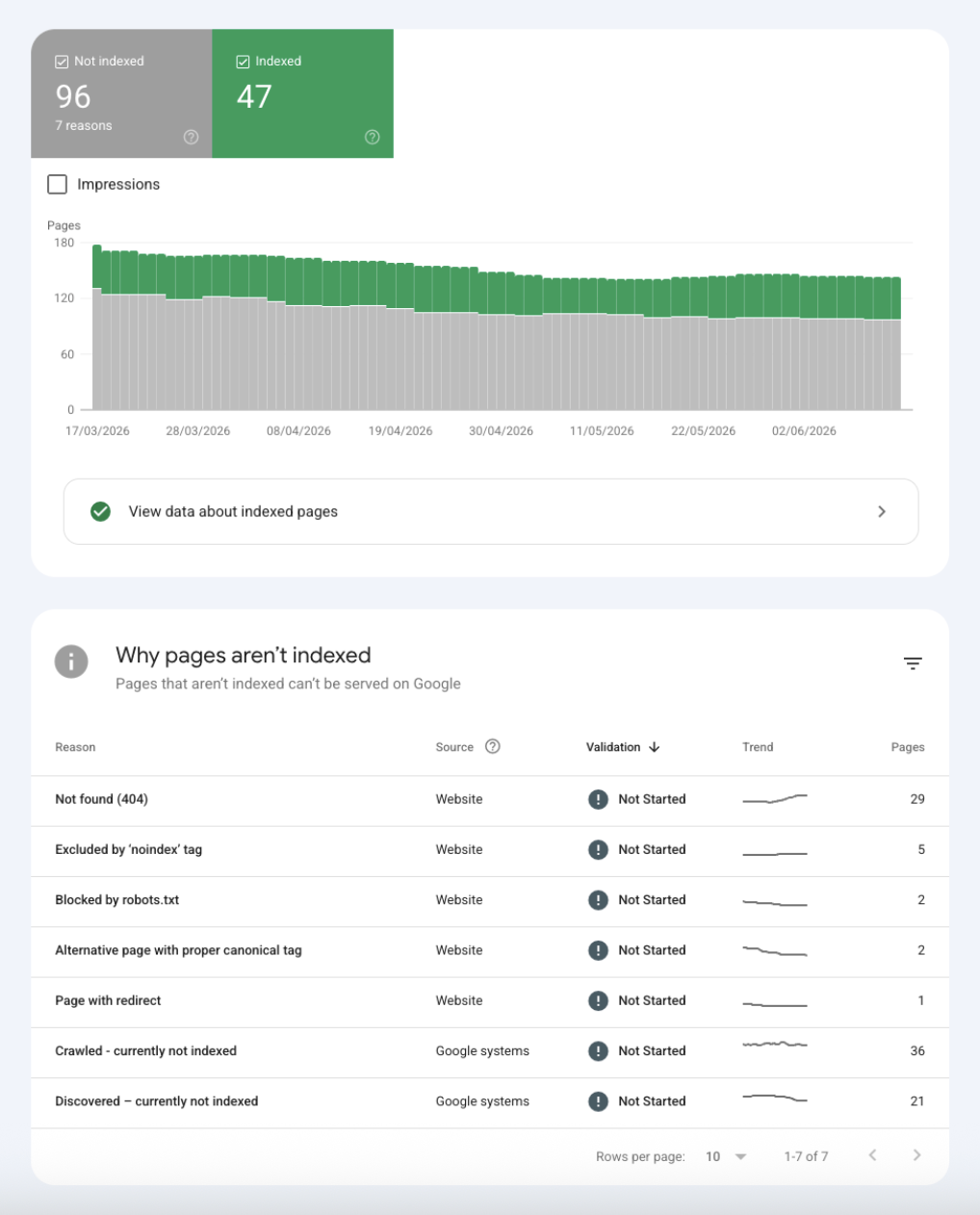
Screenshot of site on Google Search Console before reindexing
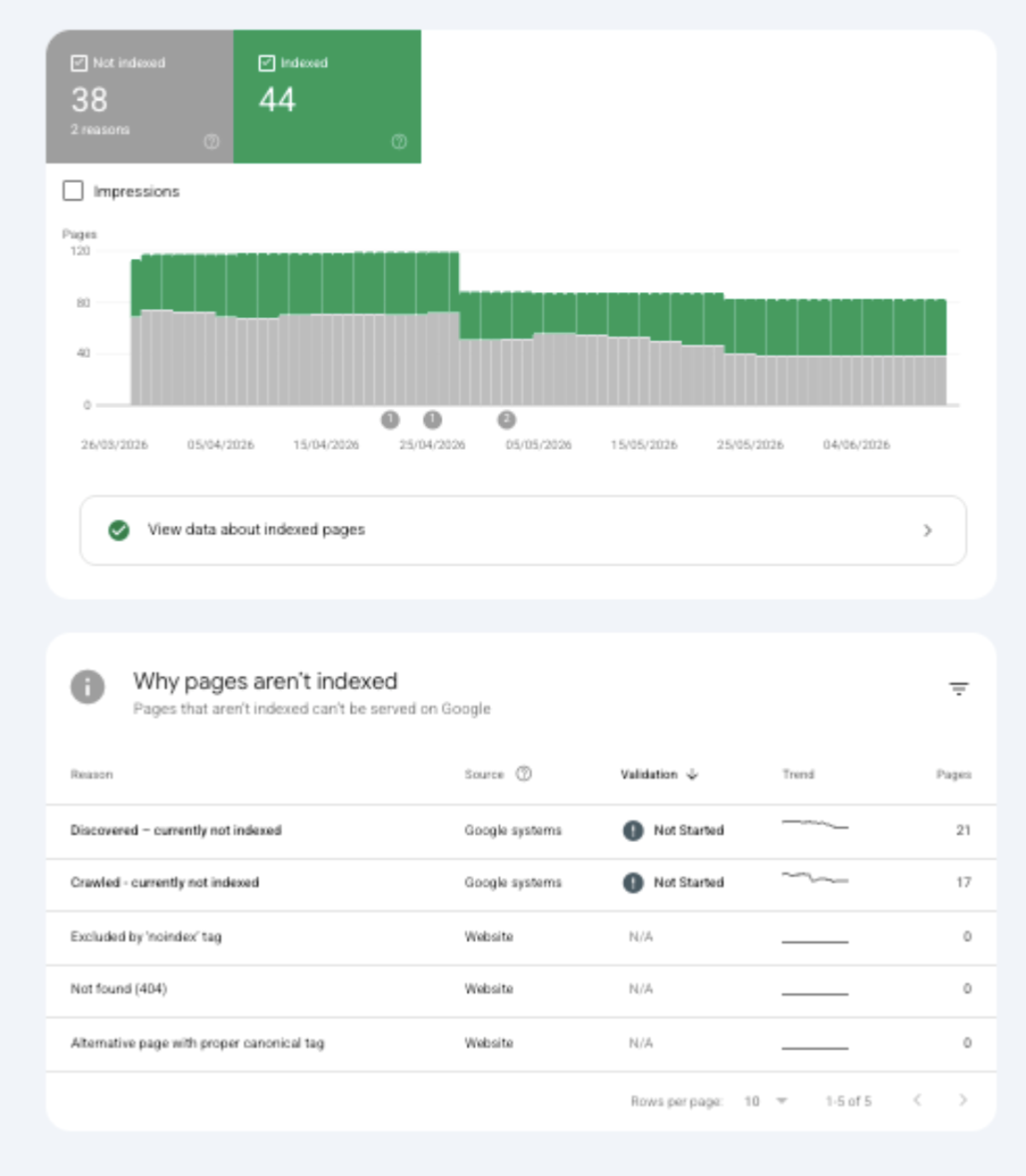
Screenshot once the reindex was performed.
Key Lessons Learned
Several important lessons emerged throughout this process.
First, SEO is rarely about a single fix.
Meaningful improvements come from dozens of small, strategic decisions working together.
Second, not every SEO warning deserves immediate attention.
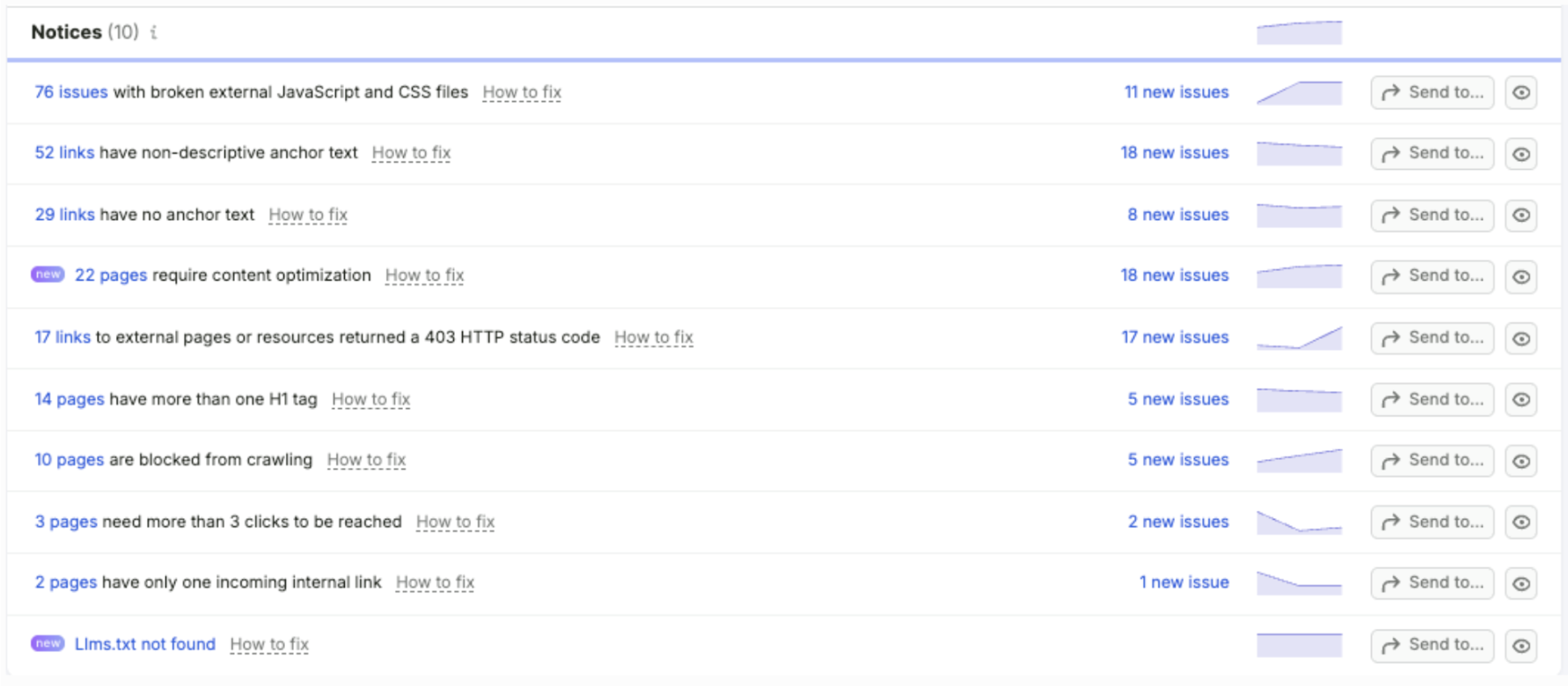
*A lot of these notices are not going to impact your SEO score.
Understanding which issues genuinely affect performance is far more important than chasing perfect audit scores.
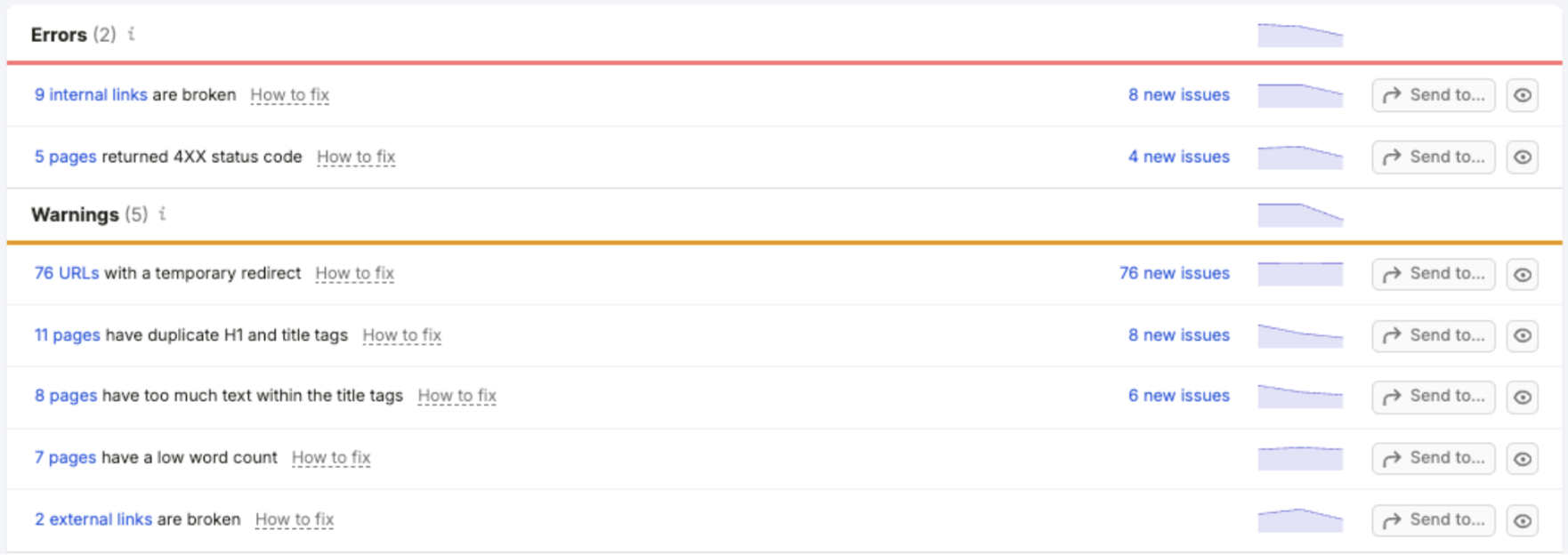
*These are a priority to fix above everything else.
Third, site structure matters.
Clear page hierarchy, strong internal linking, and logical content relationships help search engines understand expertise and authority.
Fourth, content quality consistently outperforms content quantity.
A few strong pillar articles will often outperform dozens of fragmented posts.
Finally, SEO is a long-term investment.
The improvements made during this project created a stronger foundation for future rankings, visibility, and authority.
The work completed over several weeks will continue generating value long after the technical changes themselves have been forgotten.
Improving the SEO performance of the Legs Brands website was not about shortcuts, hacks, or chasing algorithms.
It was about creating clarity.
By cleaning up technical issues, consolidating content, strengthening service pages, improving site architecture, and monitoring performance carefully, we transformed the website into a stronger platform for long-term growth.
The improvement from approximately 75% to 90% site health was an important milestone, but it was only one measurement of success.
The real achievement was building a website that better communicates expertise, supports users, and gives search engines the signals they need to understand the value of the Legs Brands brand
The journey continues, but the foundation is now significantly stronger than when it began.