

Why We Created a Regional Pricing Strategy for BCSS
A reflection by Evan Hamlyn, Founder of Legs Brands®
Welcome to Field Notes. Our journal of real projects, real decisions and real lessons from the work we do every day.
No theory. No recycled advice. Just practical insights from the field, shared to help other businesses grow.
One of the biggest marketing lessons I've learnt over the past year had nothing to do with advertising.
It wasn't about social media.
It wasn't about SEO.
It wasn't about AI.
It wasn't even about branding.
It was about friction.
More specifically, the small, often invisible barriers that stop the right people from saying yes.
I think businesses spend a lot of time asking,
"How do we find more customers?"
Far fewer stop to ask,
"Why aren't the right customers buying already?"
Those are very different questions.
One looks outward.
The other forces you to look inward.
That shift in thinking happened while working alongside the Bazaruto Center for Scientific Studies.
Ironically, it wasn't the project we'd originally been asked to work on.
Field Note #1
Growth doesn't always start with finding more people.
Sometimes it starts by removing what's standing in front of the people who already want to say yes.
When we first began working with BCSS, the conversation wasn't about pricing.
It was about communication.
Like most projects, we started with a brief.
Help communicate the organisation's programmes more clearly.
Update brochures.
Improve the website.
Support their marketing.
On paper, that's exactly what we were doing.
But one of the things I've noticed over the years is that the best strategic work rarely stays inside the original brief.
The more time you spend understanding a business, the more you start noticing things nobody mentioned in the kickoff meeting.
Patterns.
Assumptions.
Missed opportunities.
Questions people have stopped asking because "that's just how we've always done it."
Those moments are where strategy becomes interesting.
Because you're no longer solving the problem you were given.
You're solving the problem underneath it.
Looking Beyond the Brief
The more we immersed ourselves in BCSS, the clearer something became.
The organisation wasn't serving one audience.
It was serving several.
International travellers.
Southern African residents.
Marine science students.
Researchers.
Divers.
Conservation volunteers.
Ocean advocates.
All deeply interested in the same mission.
All arriving with completely different circumstances.
That's easy to overlook.
When you spend every day inside a business, it's natural to think of your audience as one group.
But they rarely are.
Every segment has different motivations.
Different budgets.
Different expectations.
Different barriers.
That's when the conversation shifted.
Not because anyone asked us to rethink the pricing model.
Because we started asking ourselves a different question.
"Is everyone experiencing the same barrier?"
The answer was no.
And once we realised that, it became impossible to ignore.

Field Note #2
One audience doesn't mean one experience.
The people buying the same product aren't always buying it under the same circumstances.
We Realised the Barrier Wasn't the Product
One thing became obvious fairly quickly.
Nobody questioned the value of what BCSS offered.
A permanent Ocean Observatory.
Hands-on scientific training.
Marine conservation programmes.
World-class diving.
Access to researchers working in one of Africa's most remarkable marine ecosystems.
The experience spoke for itself.
The challenge wasn't convincing people it was worthwhile.
The challenge was that different audiences experienced the price very differently.
An international traveller planning a once-in-a-lifetime expedition arrives with a very different perspective to a student from Southern Africa.
A university researcher has different constraints to a recreational diver.
Someone travelling from Europe isn't making the same financial calculations as someone driving across a neighbouring border.
Yet they all cared about the same thing.
Marine conservation.
Education.
Exploration.
Purpose.
That's when we stopped looking at pricing as a finance conversation.
We started looking at it as an accessibility conversation.
Because accessibility isn't simply about whether something is affordable.
It's about whether the right people feel a genuine pathway to participate.
That's a subtle distinction.
But I think it's an important one.
Field Note #3
Price communicates more than cost.
It communicates who feels welcome.
That doesn't mean every business should become cheaper.
Far from it.
I've seen businesses damage their positioning by assuming lower prices automatically create growth.
They don't.
Cheap isn't a strategy.
Accessible is.
Those are very different ideas.
Accessibility asks,
"How do we help the right people participate without reducing the value of what we offer?"
Discounting asks,
"How do we sell more?"
One builds long-term relationships.
The other often becomes difficult to sustain.
For BCSS, the conversation wasn't about reducing the value of the experience.
If anything, spending more time understanding the organisation made us appreciate its value even more.
The goal was to recognise that neighbouring countries often experience that value through a different economic reality.
Acknowledging that isn't weakening a brand.
It's understanding your audience.
That's How the Regional Pricing Strategy Emerged
What's interesting is that nobody walked into the first meeting and said,
"Let's create a regional pricing strategy."
It emerged naturally.
The more we understood the organisation, the more obvious the opportunity became.
Rather than asking,
"How do we attract more people?"
we began asking,
"Who already wants to be here but finds participation unnecessarily difficult?"
That's a much more useful question.
Because it shifts the conversation away from acquisition and towards inclusion.
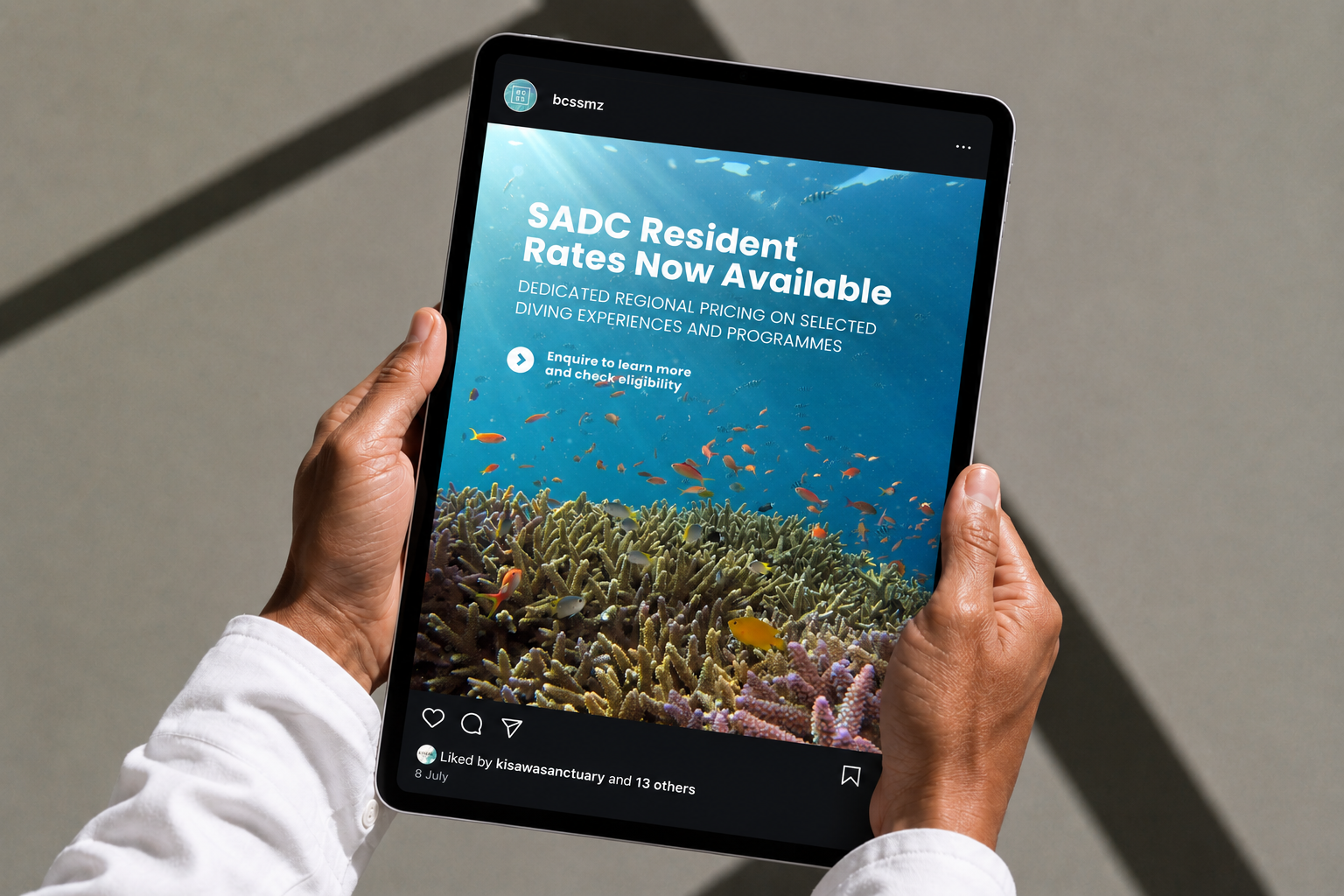
The result wasn't a discount.
It was a regional pricing strategy that recognised Southern African residents weren't the same audience as long-haul international travellers.
The experience didn't change.
The science didn't change.
The conservation impact didn't change.
Only the pathway to participation became more accessible.
That's an important distinction.
One protects the value of the brand.
The other expands the community around it.

Field Note #4
Growth isn't always about adding more customers.
Sometimes it's about removing the friction stopping the right ones from joining you.
Strategy Only Works If People Understand It
Of course, changing a pricing structure is only half the job.
If people don't understand it...
It may as well not exist.
That's something I think businesses underestimate.
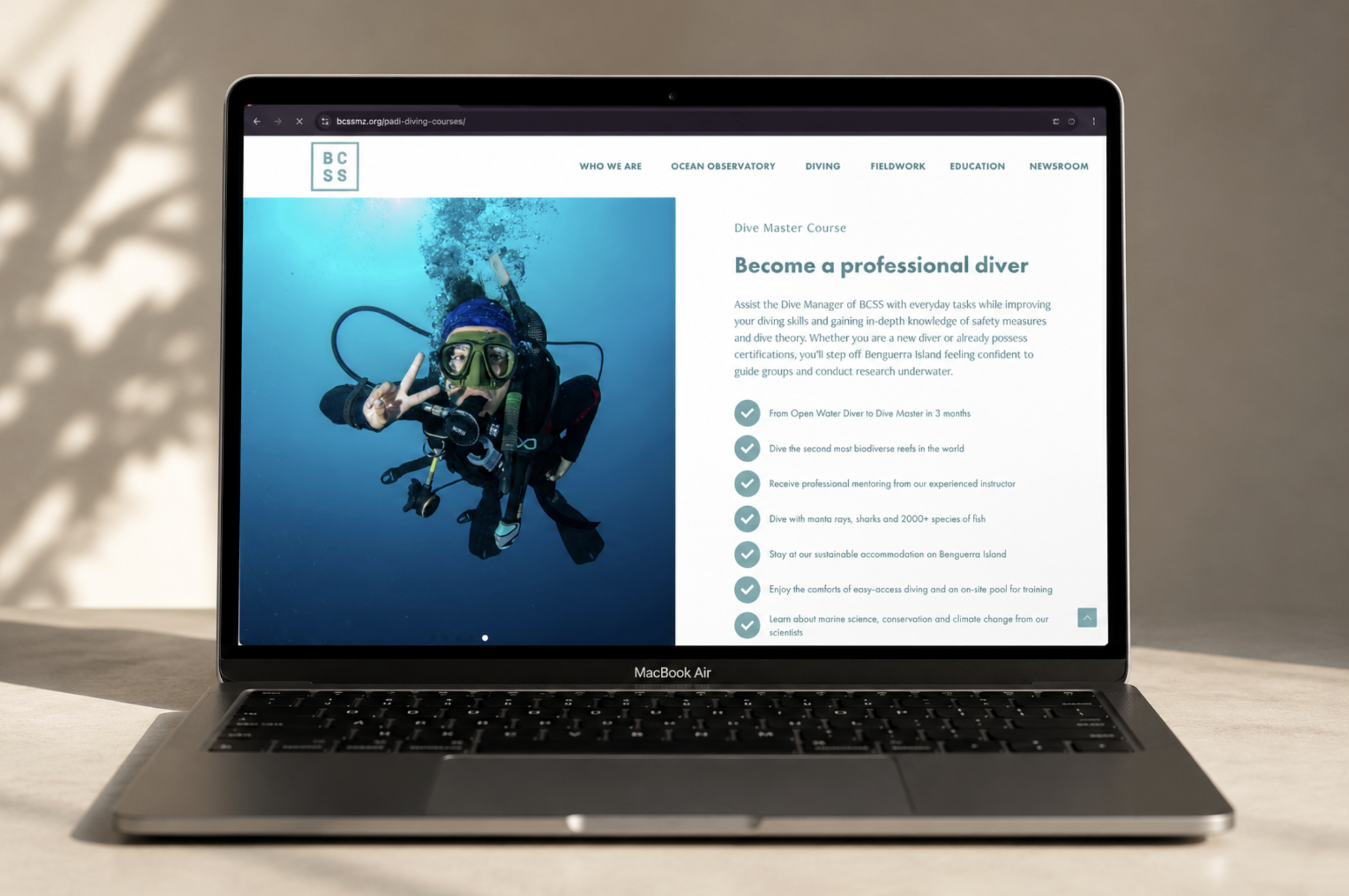
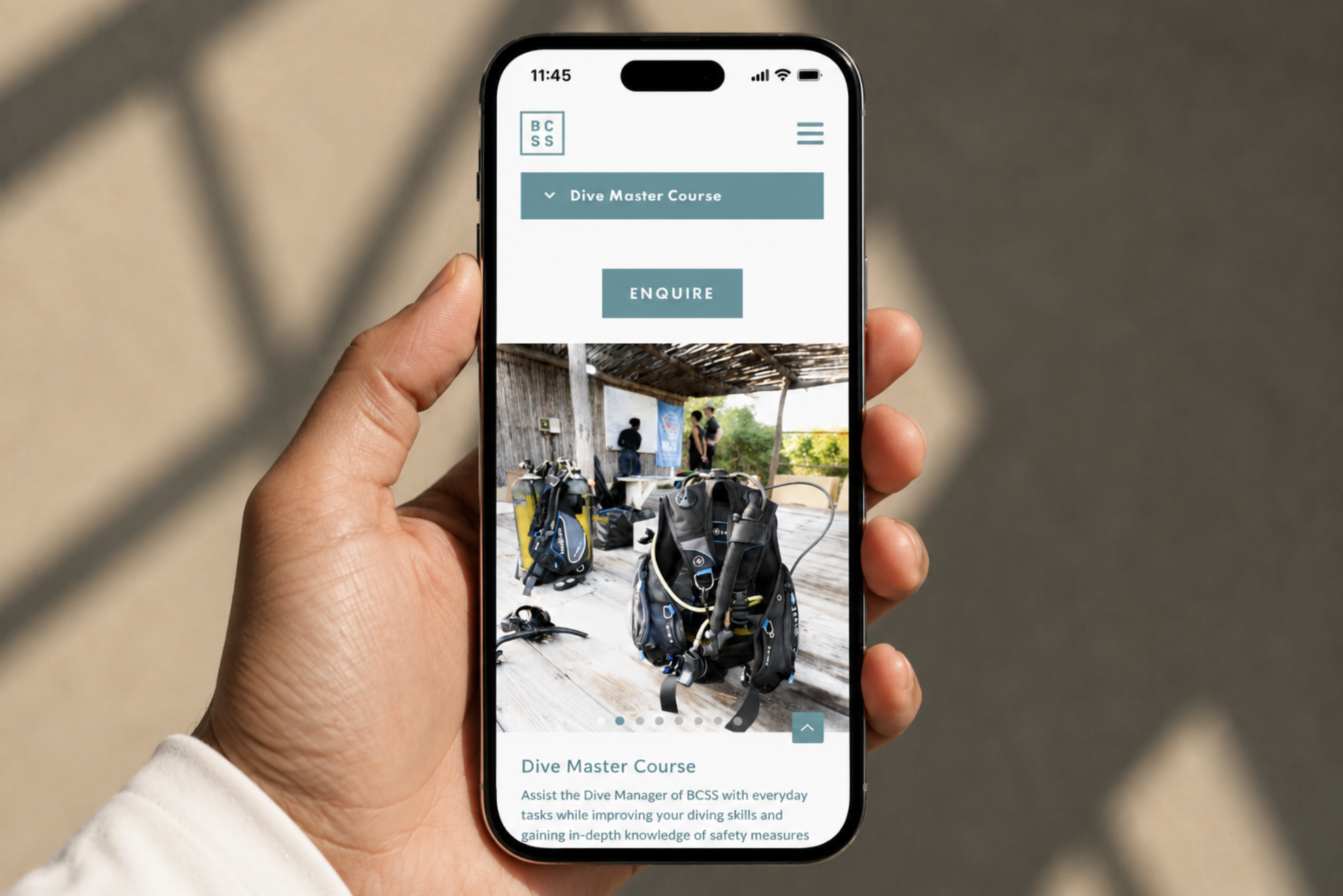
A brilliant strategic decision hidden inside an outdated brochure, a confusing website or inconsistent messaging isn't much of a strategy at all.
Every touchpoint needed to tell the same story.
The website.
The brochures.
Email newsletters.
Social media.
Partner communications.
Sales conversations.
Each one needed to explain the new pricing clearly and consistently.
Not just what had changed.
Why it had changed.
Because transparency builds confidence.
People are surprisingly comfortable with different pricing structures when they understand the reasoning behind them.
Confusion usually comes from inconsistency, not complexity.
That was another reminder that marketing isn't simply promotion.
It's communication.
A great strategy only creates value once people understand it.
And understanding doesn't happen by accident.
It happens through consistency.
What Surprised Us Most
One of the reasons I enjoy writing these Field Notes is because they force me to separate assumptions from observations.
They're rarely the same thing.
Going into this project, I expected the conversation around pricing to be delicate.
Pricing often is.
Businesses worry about perception.
They worry about fairness.
They worry that making something more accessible will somehow make it feel less valuable.
What surprised me was almost the opposite.
When the reasoning was clear, people understood it.
More than that...
They appreciated it.
Because the strategy wasn't about favouring one audience over another.
It was about recognising that different audiences arrive from different realities.
I don't think people expect every customer to pay exactly the same amount in every situation.
We already accept that student pricing exists.
Resident rates exist.
Off-season pricing exists.
Child tickets exist.
Early bird pricing exists.
The principle isn't new.
What's important is that the reasoning feels fair.
That transparency reinforced something we'd started noticing across other projects too.
People don't lose trust because prices differ.
They lose trust when they can't understand why they differ.
Field Note #5
Fairness isn't everyone paying the same price.
It's everyone understanding the reason behind it
Another thing that surprised us was how naturally the strategy aligned with BCSS's purpose.
Initially, I wondered whether introducing regional pricing might shift the perception of the organisation.
Would it somehow make the experience feel less premium?
Less exclusive?
Less valuable?
Instead, it seemed to do the opposite.
It reinforced why BCSS exists in the first place.
The organisation isn't simply offering experiences.
It's building a community around marine science and conservation.
If participation is part of your mission...
Then accessibility isn't a compromise.
It's part of the strategy.
That was a valuable reminder.
The strongest brands aren't always the ones that protect exclusivity at every opportunity.
Sometimes they're the ones that carefully expand access without compromising what makes them special.
Those aren't competing ideas.
When they're done thoughtfully, they strengthen each other.
Looking Back, We'd Still Keep Building
Like every project we've written about in Field Notes, this one isn't finished.
Good strategy never really is.
If we were starting again tomorrow, there are a few areas we'd continue exploring.
I'd love to see audience-specific landing pages that speak directly to different groups rather than asking everyone to navigate the same journey.
A prospective student doesn't have the same questions as a recreational diver.
A university researcher isn't looking for the same information as someone planning a conservation holiday.
Why should they all land on exactly the same page?
I'd also continue developing audience-specific email journeys.
Not more emails.
Better ones.
The kind that introduce people to the aspects of BCSS they're most likely to care about.
Regional campaigns would be another natural step.
Not because the message changes.
Because the context does.
The way you speak to someone living in Johannesburg isn't necessarily the way you speak to someone planning a trip from Germany.
The mission remains identical.
The conversation evolves.
I'd also spend more time educating travel partners and referral networks.
A strategy only works when everyone communicating it understands the thinking behind it.
Otherwise, consistency begins to disappear.
None of those ideas represent a change in direction.
They're simply the next layer.
That's something I've come to appreciate about strategy.
It's rarely one big breakthrough.
It's usually a series of thoughtful refinements.
Each one removing a little more friction than the last.

Field Note #6
The best strategies are never really finished.
They're simply refined every time you understand your audience a little better.
So, What Can Other Businesses Learn?
You don't need to run a marine conservation organisation for this lesson to apply.
The principle is much bigger than pricing.
Every business has friction.
Sometimes it's price.
Sometimes it's complicated booking processes.
Sometimes it's confusing messaging.
Sometimes it's long response times.
Sometimes it's asking customers to jump through unnecessary hoops before they can say yes.
The mistake is assuming growth always comes from attracting more people.
Often, it comes from making the journey easier for the people who are already interested.
Before increasing your advertising budget...
Before launching another campaign...
Before trying to reach a completely new audience...
Ask yourself a simpler question.
What's making it harder than it needs to be for the right customer to choose us?
I've found that's often where the most valuable opportunities are hiding.
Not in the marketing campaign.
Inside the business itself.
And those are usually the most rewarding problems to solve.
The Legs Take
Looking back, I don't think this project was really about pricing.
It was about perspective.
We started with a communication brief.
We ended up having conversations about accessibility, participation and long-term growth.
That only happened because we allowed ourselves to look beyond the original question.
I think that's something every strategist should be willing to do.
The brief tells you where to begin.
It shouldn't tell you where to stop.
Some of the best ideas we've had at Legs Brands have never appeared in the original scope of work.
They've come from asking one more question.
Sitting in one more meeting.
Spending one more day understanding how a business actually works.
That's where the interesting opportunities usually reveal themselves.
Working alongside Bazaruto Center for Scientific Studies reminded me that marketing isn't just about helping people discover an organisation.
Sometimes it's about helping the organisation discover itself.
To see opportunities that have always been there, hidden beneath familiar ways of thinking.
In this case, the opportunity wasn't another campaign.
It wasn't a bigger advertising budget.
It wasn't more content.
It was recognising that the same experience could become more accessible to the right audience without losing any of its value.
That's a powerful idea.
Because it changes the role marketing plays inside a business.
If there's one thing this project reinforced for me, it's this:
The fastest path to growth isn't always finding more customers.
Sometimes it's making it easier for the right customers to say yes.
That's a very different way of thinking about marketing.
And I suspect it's one we'll continue coming back to.
If Your Business Is Looking for Growth...
...don't just ask how to reach more people.
Ask what's stopping the right people from choosing you today.
Sometimes the answer is your messaging.
Sometimes it's your positioning.
Sometimes it's the customer journey.
And sometimes it's a barrier that's become so familiar, nobody inside the business notices it anymore.
Takeaway
The biggest barrier to growth often isn't a lack of customers. It's unnecessary friction.
Whether it's pricing strategy, market segmentation, customer accessibility or a broader growth challenge, the most valuable opportunities often begin with a fresh perspective rather than a bigger marketing budget.
If you'd like to explore where unnecessary friction might exist in your business, we'd love to help.
Book a strategy session with Legs Brands and let's uncover the opportunities that could unlock your next stage of growth.
